
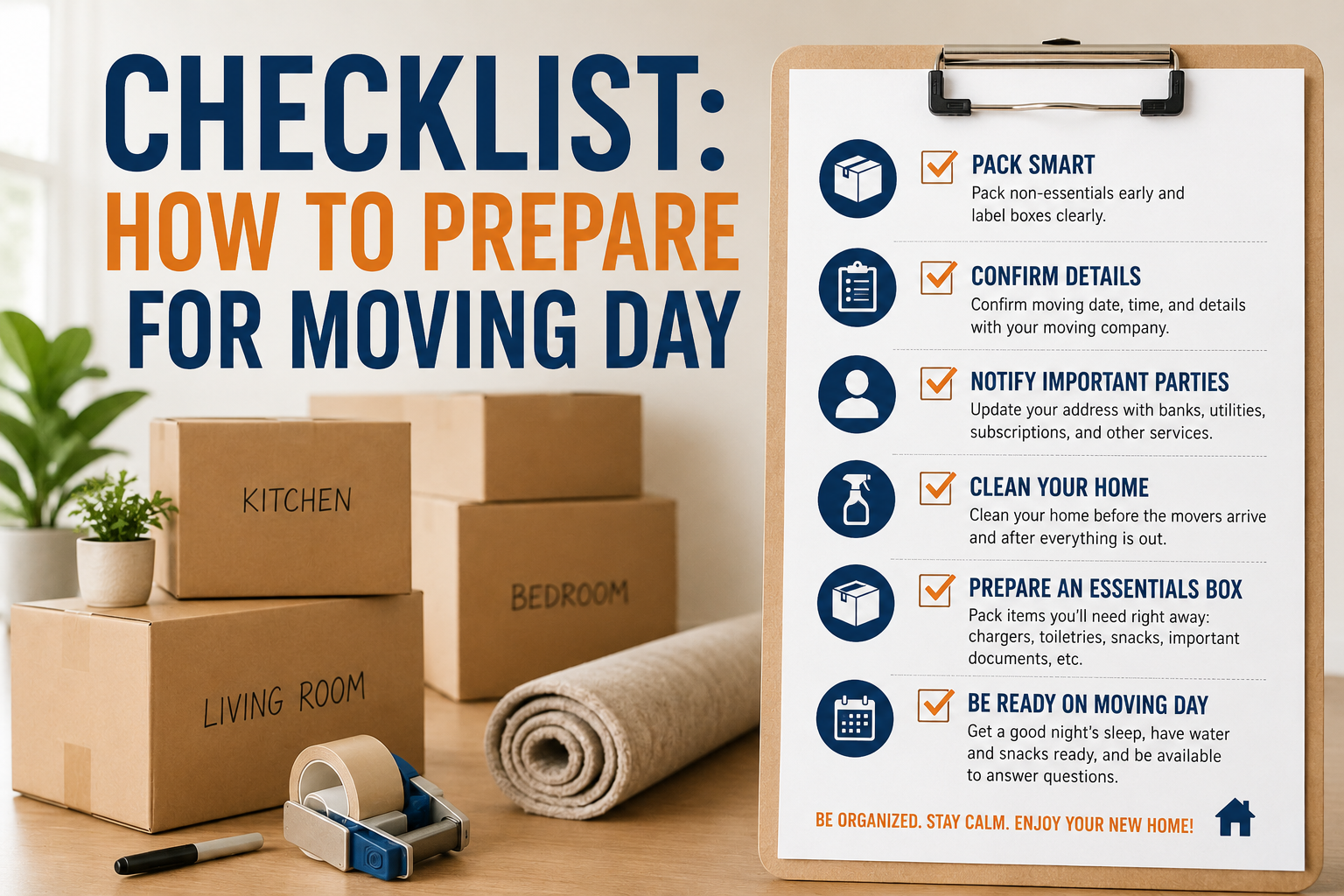
It was 6 a.m. on a Tuesday. The kids were awake, the boxes weren’t labelled, and the movers were pulling into the driveway. The TV remote was missing, the cat was somewhere in the walls, and nobody could find the coffee maker. Sound familiar? That’s what happens when you don’t know how to prepare for moving day ahead of time. This guide is for every Canadian family who wants to skip that moment — and actually feel ready when the truck shows up.
What Should You Do the Week Before Moving Day?
Most of the chaos on moving day doesn’t start on moving day. It starts seven days before, when people assume they’ll figure it out later.
The week before is your window. Use it.
Start by going room by room and finishing your packing. Every box should be sealed, taped, and labelled with the room it belongs to and a rough idea of what’s inside. Don’t leave “miscellaneous” boxes — that’s just future-you’s problem in disguise.
Confirm your moving date and time with your moving services provider. If you’re working with Swift Mover, they’ll already have your details locked in, but a quick confirmation call removes any day-of surprises. Double-check your building’s elevator booking if you’re in a condo or apartment — in cities like Winnipeg, Calgary, or Toronto, elevators fill up fast on weekends.
Gather your moving documents. Under Canada’s Moving and Relocation Guidelines from the Government of Canada, you may be eligible to claim moving expenses on your tax return if you’re relocating for work or school. Keep all your receipts from moving services, packing supplies, and temporary accommodations.
How Do You Organize a Moving Day Checklist?
Knowing how to prepare for moving day comes down to working backwards from the truck’s arrival. Here’s a simple process:
Step 1 — Six weeks out: Book your movers. Research local moving services and get confirmation in writing.
Step 2 — Four weeks out: Start packing non-essentials. Books, seasonal clothes, decorations, anything you won’t need before the move.
Step 3 — Two weeks out: Notify your utility companies, Canada Post, your bank, and your kids’ schools. The Government of Canada’s change of address tool lets you update the CRA directly — don’t skip this step.
Step 4 — One week out: Finish all packing. Label everything. Disassemble large furniture if needed.
Step 5 — Two days out: Pack your essentials bag. This is the bag that stays with you — not on the truck. Phone charger, toiletries, one change of clothes, your kids’ favourite comfort item, snacks, medications, and important documents.
Step 6 — Moving day: Walk every room before the truck leaves. Check inside closets, under beds, in the garage. Leave nothing behind.
This is the structure professionals use when advising families on how to prepare for moving day without losing their minds.
What Do Most People Forget When Preparing for Moving Day?
The forgotten stuff is almost always the same. Here’s what slips through:
Cleaning supplies. You’ll need them at both ends — the old place gets cleaned out, the new one gets wiped down before boxes go in.
Furniture measurements. You’d be surprised how many people discover on moving day that their couch doesn’t fit through the new front door. Measure your biggest pieces and your new doorways before the truck rolls.
Food in the fridge and freezer. Clear it out two days before. Donate what you can to a local food bank — that’s a Canadian habit worth keeping.
Kids and pets. Seriously. On moving day, the safest thing for young children and animals is somewhere else — a neighbour’s place, a family member’s house. It reduces stress for everyone and keeps them safe while heavy furniture is being moved through tight spaces.
Photo documentation. Before you leave, photograph every room. If anything gets damaged in transit, you’ll want proof of the original condition.
How Do You Prepare Your New Home Before Moving In?
Arriving at an empty house feels exciting. Arriving at a dirty, unready house with a truck full of boxes feels like a different story.
Before moving day arrives, try to get into your new home at least 24 hours ahead. Wipe down the inside of all kitchen cabinets and bathroom shelves. Run a basic clean through the bathrooms. If you can, have your internet set up and running — you’ll thank yourself that night.
Sketch a rough floor plan with where the big furniture goes. This sounds extra, but when a team from Swift Mover is moving quickly and asking where the sectional goes, having a clear answer saves time and avoids moving pieces twice.
If you’re moving within Winnipeg or to a new city in Manitoba, it’s also worth checking the local municipal address change requirements. Some provinces have specific timelines for updating your driver’s license and provincial health card — Service Canada is a good starting point.
What Packing Tips Actually Help on Moving Day?
Packing well is half the battle of how to prepare for moving day. These are the tips that make a real difference:
Pack heavy items in small boxes. Books and kitchen appliances in big boxes become impossible to carry.
Use colour-coded labels per room. One colour per room, and tape a matching label on the door at the new house. It tells your movers exactly where to go without a single conversation.
Wrap fragile items in clothing. It saves on bubble wrap and keeps your clothes from taking up a full box on their own.
Pack a box of essentials for each bedroom — sheets, pillows, a lamp. Seal it and label it “open first.” That night, everyone has what they need without digging through fifteen boxes.
If you’re packing breakables or handling specialty items, the team at Swift Mover also provides packing and moving services Winnipeg for families who want professional hands on the fragile stuff.
Why Does It Help to Hire Local Moving Services?
There’s a real difference between hiring a national moving chain and working with local moving services who know your city.
A local team understands your building. They’ve dealt with tight Winnipeg laneways, narrow Montreal stairwells, and condo elevator schedules. They know how to prepare for moving day logistics that out-of-province companies miss.
Swift Mover operates with full transparency — no surprise fees, no pressure tactics, just a crew that treats your things the way they’d treat their own. Families across Manitoba trust them because they’ve built that reputation one move at a time.
When you hire local, you’re also investing back into your community. That matters here. Canadians look after each other — and good local moving services are part of that.
Conclusion: Prepare Early, Move With Confidence
How to prepare for moving day isn’t a mystery. It’s a series of steps done in the right order, with enough time to breathe between each one.
Start six weeks out. Confirm your movers early. Pack smart. Keep your essentials close. Protect your kids, your pets, and your sanity. Update your address with the CRA and Service Canada so nothing falls through the cracks on the government side. Get into your new home before the truck arrives.
Moving day doesn’t have to be a crisis. For most Canadian families who plan ahead, it’s actually a milestone — the first real day of a new chapter.
Give it the preparation it deserves.
Frequently Asked Questions
How far in advance should I start preparing for moving day?
Six to eight weeks is ideal for most Canadian families. That gives you time to book moving services, pack without rushing, and handle address changes with government agencies like the CRA and Service Canada. If you’re moving during peak season — May through August — book your movers even earlier, as availability fills up fast across most major cities.
What should go in my moving day essentials bag?
Think of everything you’d need if your boxes didn’t arrive until tomorrow. Phone charger, medications, toiletries, one change of clothes per person, snacks, kids’ comfort items, important documents like ID and lease agreements, and your new home’s keys. Keep this bag with you — never on the moving truck.
How do I update my address in Canada after a move?
Start with the CRA using their online change of address tool. Then update Service Canada for your SIN records, your provincial health card, your bank, Canada Post, and your kids’ schools. It sounds like a lot, but a single afternoon handles most of it. Set a reminder for two weeks after you move so nothing gets forgotten.
Is it worth hiring professional movers or should I do it myself?
For most families, professional moving services save more than they cost. A full DIY move involves truck rental, equipment, time, and the very real risk of injury or damage to expensive items. Local movers like Swift Mover bring experience, equipment, and efficiency that makes the day smoother — especially when there are stairs, heavy furniture, or a tight timeline involved.
What’s the best way to pack for a move with kids?
Involve them early. Let each child pack a small personal box with their favourite things — it gives them control during a stressful time. Pack their room last and unpack it first at the new home so they feel settled quickly. Keep a bag with their essentials (toys, snacks, comfort items) separate from the main load.