
Moving home in Winnipeg is a big job. When comparing residential movers, look beyond a polished website. Focus on communication, planning, care, timing, and local knowledge. The 5 Signs You’ve Found the Best Residential Movers in Winnipeg come down to five practical checks: communication, planning, care, timing, and local knowledge. These matter whether you are moving from an apartment, condo, townhouse, or house. What should good residential movers tell you before moving day? One of the clearest 5 Signs You’ve Found the Best Residential Movers in Winnipeg is useful communication. A dependable company should answer questions about packing, furniture, stairs, elevators, and access. You should know who to contact and what you need to prepare. If answers are vague or keep changing, ask for clarification before booking. Swift Mover provides residential moving services for Winnipeg homes. Do reliable movers provide a clear written plan? Another of the 5 Signs You’ve Found the Best Residential Movers in Winnipeg is a clear written plan. Check that the date, pickup and delivery locations, requested services, access details, and special handling needs are understood. Read the agreement. Written details give both sides something to refer to later. For extra consumer guidance, the Manitoba government provides information through its Consumer Protection Division. It also explains practical steps for dealing with a business problem, including keeping records and communicating concerns clearly. How can you tell if movers will handle your belongings carefully? The five signs that show you have found the best residential movers in Winnipeg are, about careful handling. I recommend that a good residential movers crew ask about furniture, stairs, elevators, parking, fragile belongings and large pieces. Wrapping items, lifting safely loading carefully and paying attention to doors and stairs are all signs that residential movers care. Before the residential movers crew arrives clear the walkways. Keep important documents and valuables in a separate place. Do dependable Winnipeg movers respect your schedule? A practical 5‑sign list for finding the best Residential Movers in Winnipeg should be kept up to date. The elevator could be delayed. Parking might be tight. Weather can affect access. A closing or possession time can leave little room for mistakes. If something changes you should be told away instead of wondering where the crew is. For movers that Winnipeg families hire, planning access and timing before the move can prevent avoidable delays. Swift Mover also supports Long Distance Moving Winnipeg customers who need help planning a move, beyond Winnipeg. What shows that a moving company understands Winnipeg homes? The final 5 Signs You’ve Found the Best Residential Movers in Winnipeg is genuine knowledge of the local moving environment. Apartment and condo moves may involve elevators, loading areas, booking rules, or limited parking. Older homes may have narrow doors, steep stairs, or tight turns. A professional crew should ask about these details. Good residential movers Winnipeg families hire should also respect your property, building rules, neighbours, and agreed schedule. What are the main benefits of choosing the right movers? Use the 5 Signs You’ve Found the Best Residential Movers in Winnipeg to judge a company by evidence rather than advertising. A well-organised moving crew can reduce heavy lifting, keep the day moving, and give you more time to handle keys, utilities, family needs, work, and your new home. Look for: Clear answers before booking Written details about the move Careful handling of household items Reliable communication and scheduling Local knowledge and professional conduct What is a simple way to choose residential movers? First, list what needs to be moved. Explain access, stairs, elevators, parking, and large or fragile items. Then ask the company to explain the service clearly. Read the details before agreeing and keep the mover’s contact information available. This gives you a straightforward way to compare home movers Winnipeg residents are considering without getting distracted by flashy claims. Why does a professional moving process matter to families? That is why the 5 Signs You’ve Found the Best Residential Movers in Winnipeg are practical rather than flashy. A dependable moving company should make the process easy to understand and give you a clear way to ask questions when something changes. Swift Mover focuses on keeping residential moves organised and straightforward for Winnipeg households. Conclusion The strongest signs are clear communication, written details, careful handling, dependable scheduling, and local knowledge. Ask questions, read the agreement, explain access conditions, and notice how the company communicates before moving day. A smoother move starts before the truck arrives. When the plan is clear and the crew understands your household needs, moving day is easier to manage. FAQs What should I ask residential movers before booking? Ask about services, dates, pickup and delivery, access, large or fragile items, and what you need to prepare. How early should I contact Winnipeg movers? Contact movers as early as practical, especially with a fixed possession date, elevator booking, or building access requirement. Can residential movers handle apartment and condo moves? Many do. Tell the company about elevators, stairs, parking, loading areas, and building rules in advance. What should I do before movers arrive? Clear walking paths, secure valuables and documents, finish your packing, and make sure movers can safely reach the items being loaded. Ask about services, dates, pickup and delivery, access, large or fragile items, and what you need to prepare. Contact movers as early as practical, especially with a fixed possession date, elevator booking, or building access requirement. Many do. Tell the company about elevators, stairs, parking, loading areas, and building rules in advance. Clear walking paths, secure valuables and documents, finish your packing, and make sure movers can safely reach the items being loaded.
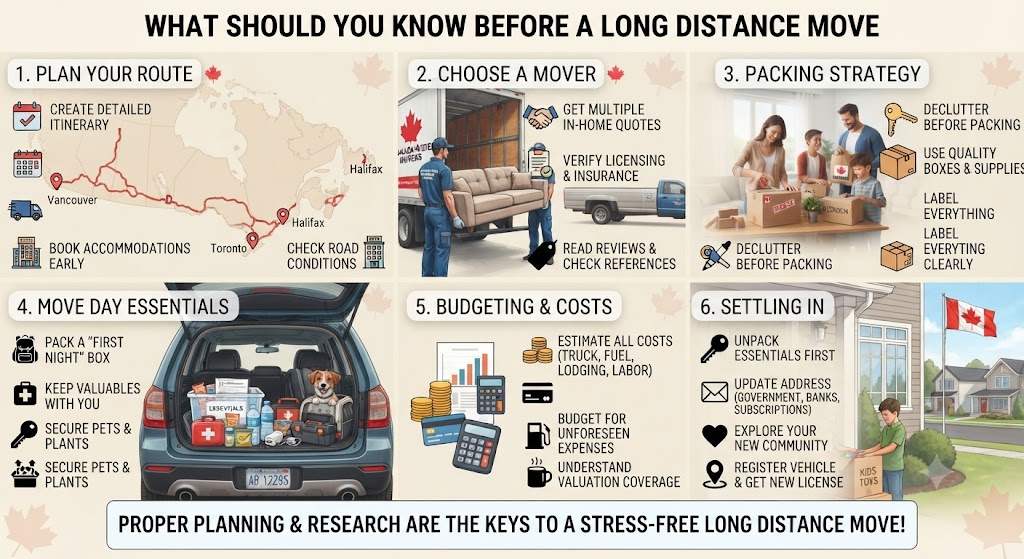
What Should You Know Before a Long Distance Move?
A long-distance move is more than putting your furniture in a truck and driving to another city. You need to plan your moving date, sort your belongings, protect fragile items, update your address, and make sure your household is ready for the trip. What Should You Know Before a Long Distance Move starts with knowing exactly what you are taking, where it is going, and when you need it there. Canadian families may also need to think about weather, road conditions, provincial requirements, work schedules, children, pets, storage, and temporary housing. A clear plan can make the move easier and reduce last-minute problems. Start early, keep important documents with you, and choose a moving company that understands long-distance moves. What Should You Know Before a Long Distance Move? The first thing to understand is that distance changes the way you plan. A local move may take a few hours. A move between provinces can take several days and may involve more planning around transportation, storage, delivery timing, and weather. Before booking anything, write down your current address, new address, moving date, preferred delivery window, and the main items that need to be moved. This simple list gives you a starting point. It also helps you explain your needs clearly when speaking with a moving company. What Should You Plan Before Moving Across Canada? Start with the big decisions first. Decide what you are moving, what you are selling, donating, recycling, or throwing away. Moving unwanted furniture across a long distance can create extra work and take up valuable truck space. Go room by room. Keep documents, medication, valuables, basic clothing, chargers, and other essentials in a personal bag rather than putting everything into the moving truck. You should also think about your first few days after arrival. Will your new home be ready immediately? Will you need temporary accommodation? Do you need storage while waiting for your new place? Planning these details early can prevent stressful surprises. How Should You Pack for a Long Distance Move? Packing for a long-distance move requires more care than packing for a short trip. Use strong boxes and avoid making them too heavy. Wrap dishes, glassware, electronics, and other fragile belongings properly. Label every box with the room and a short description of what is inside. For example: Kitchen — Plates and cookware Bedroom — Winter clothing Office — Computer accessories A simple label can save a lot of time when you start unpacking. If packing feels overwhelming, professional help can make the process more manageable. You can learn more about Packing and Moving Winnipeg and how organized packing can support a smoother move. What Are the Benefits of Planning a Long Distance Move Early? Early planning gives you more control. You have more time to sort your belongings, prepare your home, arrange transportation, organize documents, and deal with unexpected changes. It can also make the moving day less rushed. For families, early planning is especially useful. Children may need time to adjust to a new school and neighbourhood. Pets may need travel arrangements. Work schedules may need to be coordinated around the move. A written checklist helps everyone know what needs to happen next. What Should You Know Before a Long Distance Move With a Moving Company? Choosing a moving company is another important step. Ask what services are included and what the moving process looks like from pickup to delivery. Make sure the company understands the distance, the size of your move, access at both properties, and any special items that need extra care. Ask questions before booking. You should know who will handle your belongings, how communication will work, and what happens if your moving schedule changes. For families moving from Winnipeg to another city or province, Long Distance Moving Winnipeg can be a useful starting point when planning transportation. Swift Mover helps customers plan moving and transportation needs with a practical, straightforward approach. What Documents and Addresses Should You Update? Changing your address is easy to overlook when you are focused on boxes. Create a list of organizations that need your new address. This may include your bank, employer, insurance provider, subscriptions, school, medical providers, and government services. The Government of Canada explains that changing your address with one government department does not automatically update every other department. You may need to update each service separately. For example, the Canada Revenue Agency has its own address-update process. If your move is connected with a new job or school, you should also check whether you qualify for the federal moving expense deduction. CRA rules include specific conditions, including a 40-kilometre requirement in qualifying situations. Always check the current government rules for your situation rather than assuming an expense is eligible. What Is the Simplest Long Distance Moving Process? A simple process can keep the move organized. Choose your moving date Pick a date that works with your lease, home closing, work, school, and travel plans. Sort your belongings Separate items into keep, donate, sell, recycle, and discard groups. Pack and label Protect fragile belongings and clearly label every box. Prepare your home Clear pathways and make sure movers can safely access furniture and boxes. Keep essentials with you Carry important documents, valuables, medication, basic clothing, and chargers personally. Confirm the move Before moving day, confirm the pickup details, addresses, access instructions, and delivery arrangements. Check everything after delivery As boxes and furniture arrive, check that your belongings are where they should be before fully unpacking. This process is simple, but it can prevent many common moving-day problems. What Should Canadian Families Check Before a Long Distance Move? Canadian weather deserves extra attention. A move during winter can involve snow, ice, freezing temperatures, and changing road conditions. Summer moves may involve heat and longer travel periods. Check the forecast before moving day and keep flexible plans where possible. Also think about the needs of children and pets. Keep snacks, water, clothing, entertainment, chargers, and personal items easy to reach during the
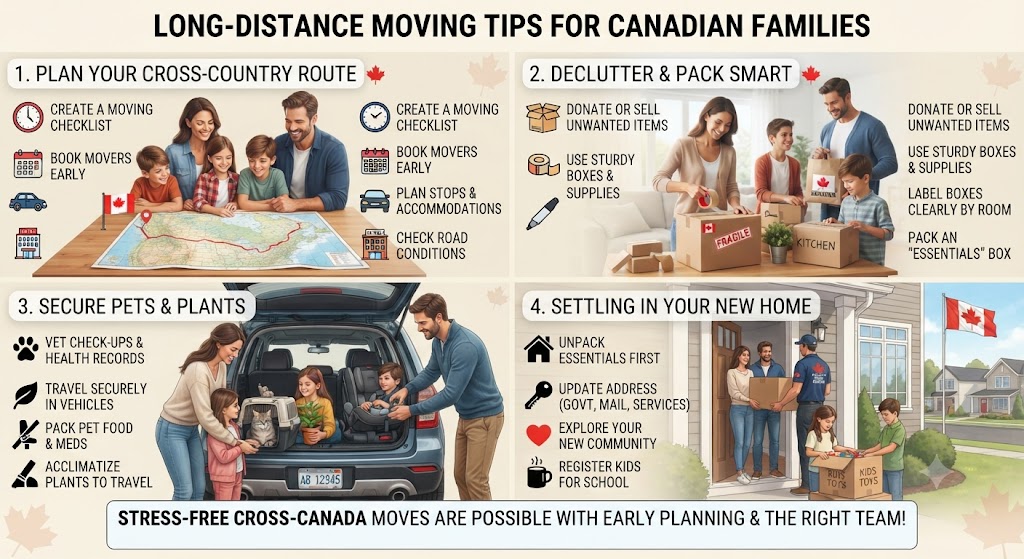
Long Distance Moving Tips for Canadian Families?
Moving to another province can be exciting, but it can also feel like a lot for one family to handle. There are boxes to pack, furniture to sort, travel plans to make, and a new home waiting at the other end. The best Long Distance Moving Tips for Canadian Families are simple: start early, reduce what you are taking, organize your belongings, choose a mover carefully, and keep important documents and valuables with you. For a long-distance move, make a plan before packing begins. Create a household inventory, separate everyday essentials, confirm your moving arrangements in writing, and prepare both homes for moving day. The Government of Canada’s Office of Consumer Affairs recommends checking movers carefully, getting moving terms in writing, creating an inventory, and confirming insurance and delivery details before the move. Why does a long-distance move feel so difficult for families? A long-distance move affects more than your furniture. Children may be leaving friends and schools. Parents may be changing jobs. Pets need travel plans. Family members may also have different feelings about leaving a familiar home. That is why Long Distance Moving Tips for Canadian Families should cover both the practical work and the people involved. Give everyone a clear idea of what will happen and when. Instead of trying to finish everything in one weekend, divide the move into smaller jobs. That makes the process easier to follow and gives your family time to deal with unexpected problems. What should Canadian families do first? Start by sorting your belongings. Walk through each room and decide what you will take, donate, sell, recycle, or remove. Do not pack things simply because they are already in your home. Fewer belongings can make packing and unloading easier. Next, make a basic inventory. List larger furniture, appliances, electronics, fragile belongings, and items that need special care. The federal consumer guidance recommends a room-by-room household inventory and says movers should have enough information about the items being moved when preparing a quote. When should you start preparing for a long-distance move? Start several weeks before moving day whenever possible. Pack items you rarely use first. Seasonal clothing, decorations, books, spare dishes, and storage-room items can usually be packed early. Keep daily essentials until later. Label every box with the room and a short description. “Kitchen – plates” is much more useful than simply writing “Kitchen.” If you need help preparing belongings for a Winnipeg move, Packing and Moving Winnipeg can be part of your moving plan. How can families choose a long-distance moving company? Choosing a mover deserves time. Do not rely only on a quick phone conversation. Ask who will handle your belongings, whether the company uses subcontractors, how items are protected, what is included in the written agreement, and how claims are handled. The Government of Canada recommends getting estimates from reputable movers, checking references, determining whether you are dealing with a mover or broker, and getting the terms of the move in writing. A physical local presence is also worth checking. For families in Winnipeg, working with a company that understands local buildings, parking, elevators, winter conditions, and neighbourhood access can make the loading process easier. These are practical Long Distance Moving Tips for Canadian Families that can prevent small problems from becoming moving-day delays. What should you keep with you during the move? Do not put everything on the moving truck. Keep identification, passports, important records, medication, wallets, phones, chargers, keys, jewellery, and other valuables with you. Prepare a small travel bag for every family member. Include clothes, toiletries, basic food, important medications, chargers, and anything needed during the first night. The Government of Canada’s moving advice specifically recommends keeping valuables such as phones, wallets, and jewellery with you personally. This is one of the simplest Long Distance Moving Tips for Canadian Families because you will not have to search through boxes immediately after a long journey. What is the easiest moving-day process? A simple process can keep everyone on track. Step 1: Finish packing before the movers arrive.Keep essential bags separate. Step 2: Prepare the property.Clear walkways and protect areas where furniture will pass. Step 3: Check building requirements.If you live in an apartment or condo, confirm elevator and parking arrangements. Step 4: Review the inventory.Make sure the items being loaded are listed correctly. Step 5: Photograph important belongings.Photos can help document their condition before transport. Step 6: Keep documents and valuables with you. Step 7: Check the shipment when it arrives.Compare your belongings with the inventory and note any damage or missing items. For long-distance moves, the federal consumer guidance also recommends checking items during unloading and keeping the inventory for your records. What should families do after arriving in another province? The move does not finish when the truck leaves. You may need to update your address with government services, banks, employers, schools, insurance providers, utilities, and other organizations. The Government of Canada explains that a new address is not automatically shared between government departments, so you may need to update each relevant service separately. If you use CRA services, the CRA also recommends updating your address as soon as possible after moving. Health cards and driver’s licences are handled by provincial or territorial governments, so check the requirements for your new province. These simple Long Distance Moving Tips for Canadian Families can help prevent missed mail and outdated records after the move. What are the benefits of planning a long-distance move early? Early planning gives your family more breathing room. You can sort belongings without rushing. You can ask movers questions before moving day. You can arrange building access and parking. You can prepare children and pets for the journey. You can also keep important paperwork organized. Most importantly, early planning gives you time to deal with problems before they affect the entire move. How can Winnipeg families prepare for a long-distance move? Winnipeg families may face unique moving conditions depending on the season and type of home. Apartments and condos may
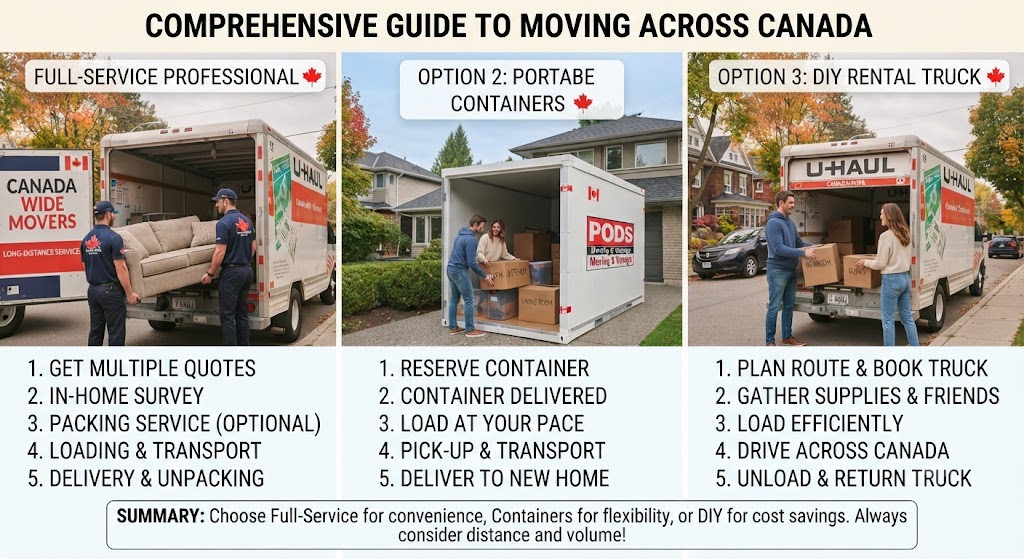
How to Move Across Canada: A Complete Guide
Moving from one province to another can feel like a lot at first. You are not only packing boxes. You may be changing your home, job, school, health coverage, driver’s licence, mailing address, and daily routine. How to Move Across Canada: A Complete Guide starts with one simple idea: plan the move in small steps instead of trying to handle everything at once. Start by choosing your moving date, confirming your new home, sorting your belongings, and deciding how they will travel. Then update your government records, arrange mail forwarding, pack carefully, and prepare for moving day. If you are moving a family, an apartment, a condo, or a business, the same basic approach works. A clear plan can make a long-distance move easier to manage from beginning to end. What should you do first when moving across Canada? The first step is to build a moving checklist. Write down: Your moving date Your old and new addresses Your moving company or transportation plan Important documents Utilities to cancel or start Government accounts that need an address update Items you want to sell, donate, recycle, or discard Packing tasks for each room Give yourself enough time. A cross-country move can involve several days of travel, so avoid leaving major tasks until the final week. If you are moving from Winnipeg to another province, professional help can also make the physical side of the move easier. Swift Mover provides long-distance moving support for households that need help getting furniture and belongings safely from one location to another. How do you plan a long-distance move across Canada? A good long-distance plan begins with the route and the amount you are moving. Make a basic inventory of your furniture, appliances, boxes, and larger belongings. This helps you understand what needs special care and what can be packed normally. Measure large furniture before moving day. A sofa that fits perfectly in your current home may not fit through the door of your new apartment. Also check access at both locations. Think about elevators, stairs, parking, narrow hallways, loading areas, and building rules. Condos and apartments may require a reserved elevator or a specific moving time. For help with a longer move from Winnipeg, you can review Long Distance Moving Winnipeg to understand the type of moving support available. What should you pack before moving across Canada? Do not start by packing everything into random boxes. Pack one room at a time. Label every box with the room and a short description of what is inside. Keep important documents, medication, chargers, basic clothing, toiletries, valuables, and essential items in a separate personal bag. You should also prepare an arrival box. Keep items such as: Toilet paper Paper towels Basic cleaning supplies Phone chargers Snacks Water A change of clothes Basic kitchen items These small things can make the first night much easier. If packing feels like the hardest part of your move, Packing and Moving Winnipeg can help you plan the packing and loading side of the job. What government information should you update after moving? An address change is more than changing the address on your bills. The Government of Canada says you need to update your address with each government department or agency that has your information because government systems do not automatically share your new address. Depending on your situation, this can include: Canada Revenue Agency Employment Insurance Canada Pension Plan Old Age Security Canadian Dental Care Plan Other federal services Your health card and driver’s licence are handled by your province or territory, so check the rules for both your old and new province. You can also update your address directly with the CRA. The CRA recommends doing this as soon as possible after a move. How can you make sure your mail follows you? Mail is easy to forget during a busy move. Canada Post offers Mail Forwarding for people moving to a new address. It can forward eligible mail from your Canadian address to another address in Canada or elsewhere. Remember that Mail Forwarding does not replace updating your address with banks, employers, government departments, insurance companies, and other organizations. It also does not forward every type of parcel, so update delivery addresses directly with companies you regularly use. What should you do during the final week? The final week should be about checking, not starting major new tasks. Confirm your moving date and arrival details. Finish packing. Clean the old home. Take photos of the property if you are renting. Keep keys, documents, phones, chargers, and personal essentials with you. Confirm that utilities at your old address are scheduled for cancellation and that services at your new home are arranged. If children or pets are travelling with you, prepare their essentials separately. A long drive is easier when everyone has what they need close by. What makes moving across Canada easier? The biggest benefit of planning early is control. You know what is being moved. You know what needs to be updated. You know what should stay with you during the trip. You also have time to deal with problems before moving day. A simple checklist can prevent common mistakes such as leaving important documents behind, forgetting mail updates, packing essentials in the moving truck, or discovering that large furniture cannot enter the new property. How does Swift Mover help with a Canadian move? A long-distance move involves more than loading a truck. The moving team needs to handle furniture, boxes, fragile items, loading, transportation, and unloading with care. For Winnipeg families and individuals, Swift Mover focuses on making the moving process clear and organized. Before moving day, discuss what you are moving, where it is going, access at both properties, and any large or delicate items that need extra attention. Clear communication helps everyone know what to expect. What is the simple process for moving across Canada? Use this basic process: Choose your moving date.Confirm your new home and travel plans. Sort your belongings.Keep, donate, sell,
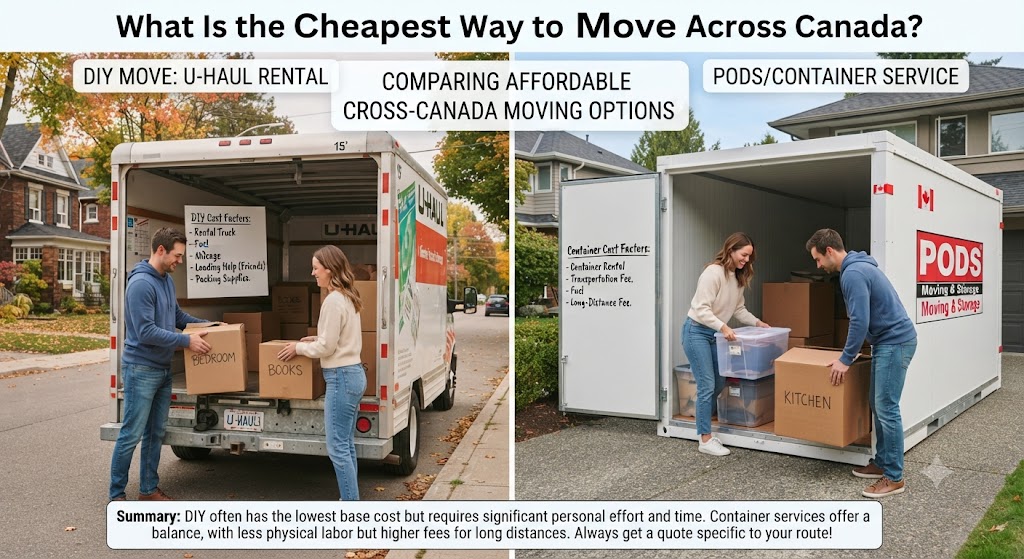
What Is the Cheapest Way to Move Across Canada?
Moving across Canada can feel expensive, especially when you are moving a family, furniture, appliances, and personal belongings over a long distance. The good news is that you can reduce the overall cost by moving fewer items, packing carefully, choosing flexible dates, and comparing moving options before booking. What Is the Cheapest Way to Move Across Canada? For most households, the answer depends on how much you own, how far you are moving, and whether you can handle some of the work yourself. A DIY truck rental can work for a small move, while a professional mover may make more sense when you have heavy furniture or a full household. Selling or donating unwanted items before the move can also reduce the amount you need to transport. What Is the Cheapest Way to Move Across Canada? What Is the Cheapest Way to Move Across Canada? Start by reducing the size of your move. Moving a smaller load usually means less packing, less loading, less transportation, and less unloading. Before you book anything, walk through every room and decide what is worth taking. Ask yourself: Will I use this item in my new home? Would replacing it cost more than moving it? Is it damaged, outdated, or rarely used? Can I sell, donate, recycle, or give it away? A lighter move can be easier to manage and may give you more options when comparing transportation methods. Why does moving less help save money? Long-distance moving is not only about the distance between two cities. The amount of household goods also affects the work involved. Large furniture, extra boxes, appliances, and unused belongings take up valuable truck space. They also require more time to handle. Selling unwanted furniture before moving can also put some money back into your moving budget. For families moving between provinces, this can make a noticeable difference in planning. Should you rent a truck or hire professional movers? For some people, renting a truck and doing the move themselves can be a practical option. However, DIY moving means you handle packing, lifting, driving, fuel planning, loading, unloading, and returning the vehicle. That can become difficult when moving a large household across several provinces. A professional company such as Swift Mover can handle much of the physical work, which can make a long-distance move easier to organize. If you are moving from or to Winnipeg, you can learn more about Long Distance Moving Winnipeg. The cheapest option on paper is not always the easiest option in real life. Consider the time, effort, equipment, travel, and responsibility involved before choosing. How can packing reduce moving costs? What Is the Cheapest Way to Move Across Canada? Another answer is to prepare your household before moving day. Good packing can reduce wasted space and help protect your belongings. Use strong boxes that are suitable for household items. Keep heavier items in smaller boxes and lighter items in larger boxes. Label every box clearly. Pack similar items together so you can find essentials quickly after arrival. You can also handle some packing yourself and leave special or difficult items to professional movers. For help with this part of the move, see Packing and Moving Winnipeg. When is the cheapest time to move? What Is the Cheapest Way to Move Across Canada? Timing can also matter. If your schedule is flexible, ask moving companies about available dates rather than choosing a single day immediately. A flexible schedule may give you more choices. Avoid making your moving date unnecessarily tight. Having a few possible dates can make planning easier and may help you find a transportation option that fits your needs. Also consider your new home’s elevator booking, parking arrangements, building rules, and access. Good planning prevents delays that can make moving day harder. What should you compare before choosing a mover? What Is the Cheapest Way to Move Across Canada? Do not compare companies based on one number alone. The Government of Canada’s Office of Consumer Affairs recommends getting estimates from at least three reputable movers and getting the quote and terms in writing. It also recommends checking the mover’s local presence, insurance arrangements, references, and whether you are dealing with a mover or a broker. Ask each company what is included. Confirm details such as: Packing or unpacking Loading and unloading Transportation Storage Special handling Delivery arrangements Insurance or protection options Extra services A clear written quote makes it easier to compare similar services. Can moving expenses be tax deductible in Canada? What Is the Cheapest Way to Move Across Canada? may also involve looking at eligible tax deductions. The Canada Revenue Agency says eligible employees, self-employed individuals, and qualifying students may be able to claim certain moving expenses when they meet the required conditions. Eligible expenses can include transportation and storage of household items, as well as certain travel expenses. For employment-related moves within Canada, one key CRA condition is that the new home must generally be at least 40 kilometres closer to the new work location by the shortest public route. Keep your receipts and check the current CRA rules before making a claim. What is a simple way to lower your moving costs? What Is the Cheapest Way to Move Across Canada? Follow a simple process: Step 1: Make a complete inventory. Step 2: Sell, donate, recycle, or dispose of items you do not need. Step 3: Pack non-essential items early. Step 4: Compare at least three moving options. Step 5: Get the details in writing. Step 6: Confirm your moving date, building access, parking, and delivery details. Step 7: Keep receipts, documents, and your inventory list. This approach keeps the move organized without making the process more complicated than it needs to be. Why should Canadian families choose a local moving company? Long-distance moving involves trust. You are giving another company responsibility for belongings that may have personal, financial, or family value. A local company gives you a place to ask questions before moving day. You can also

How to Move Long Distance Without the Stress?
Moving across Manitoba or to another province can feel like a lot at once. You have a home to pack, work and family plans to manage, important documents to update, and a moving day that has to go smoothly. The good news is that How to Move Long Distance Without the Stress usually comes down to starting early, staying organized, and knowing what needs attention first. For a long-distance move, make a simple plan before packing. Decide what you are taking, what needs special care, and what can be donated or removed. Create an inventory, confirm your moving arrangements in writing, and keep important personal items with you. The Government of Canada also recommends checking a mover carefully, getting details in writing, protecting your belongings, and keeping an inventory during a move. Why can a long-distance move feel so stressful? A long-distance move has more moving parts than a typical local move. You may be travelling for hours or even days. Your belongings may need to stay in transit for longer. You may also have to coordinate elevators, parking, building rules, work schedules, children, pets, utilities, and your new home. That can feel overwhelming when everything is happening at once. The solution is not to do everything in one day. Break the move into small tasks and give yourself enough time to complete each one. That is the basic idea behind How to Move Long Distance Without the Stress: reduce last-minute decisions before moving day arrives. What should you do first when planning a long-distance move? Start with a room-by-room plan. Walk through your home and make four simple groups: Take with you Donate Sell Remove or dispose of Do not pack items simply because you own them. Long-distance moves are a good opportunity to reduce clutter. Next, make an inventory of the items you plan to move. Include furniture, appliances, electronics, fragile items, and anything that needs special handling. The Government of Canada’s consumer guidance recommends creating a household inventory and making sure the mover has enough information to prepare an accurate written quote. How far in advance should you start packing? For most households, starting several weeks before the move makes the process easier. Begin with things you rarely use. Seasonal clothing, decorations, books, extra kitchen items, storage-room contents, and spare furniture can usually be packed early. Leave everyday essentials until closer to moving day. Use strong boxes and label each box with the room and a short description of its contents. For example, write “Kitchen – dishes” rather than simply “Kitchen.” This makes unloading much easier. If you want help with the packing side of your move, you can explore Packing and Moving Winnipeg for organized packing and moving support. What should you look for when choosing a long-distance mover? Do not choose a mover based only on a quick phone conversation. Ask who will handle your move, what services are included, how your belongings will be protected, and what happens if plans change. Get important details in writing. The Government of Canada’s Office of Consumer Affairs advises consumers to compare reputable movers, check references, understand whether they are dealing with a mover or broker, and get the terms of the move in writing. You should also ask about insurance, claims, special-care items, delivery arrangements, and the moving inventory. These questions can prevent confusion later. What is the simplest process for a stress-free long-distance move? A simple process can keep the move under control. Step 1: Choose your moving date.Confirm your new-home availability and any building requirements. Step 2: Sort your belongings.Remove things you no longer need before packing. Step 3: Create an inventory.Record important furniture and valuable or fragile items. Step 4: Pack by room.Label boxes clearly and keep essential items separate. Step 5: Confirm your mover.Review the written details and make sure both sides understand the plan. Step 6: Prepare moving day.Reserve elevators, arrange parking, protect pathways, and keep valuables with you. Step 7: Check everything at delivery.Use your inventory while unloading and note missing or damaged items. This step-by-step approach is at the heart of How to Move Long Distance Without the Stress because it replaces a large, stressful job with smaller tasks. What should you keep with you during the move? Some belongings should not go into the moving truck. Keep your identification, important documents, medication, phone chargers, valuables, keys, basic toiletries, a change of clothes, and essential children’s or pet supplies with you. Prepare an overnight or first-night bag for your destination. That way, you are not searching through boxes after a long day of travel. The Government of Canada also advises keeping valuables such as your phone, wallet, and jewellery with you personally during moving day. What government updates should you make after moving? Changing your address is an easy task to forget. The Government of Canada says your address is not automatically shared between government departments, so you need to update each relevant service separately. You may need to update information for tax services, benefits, Service Canada programs, and other government services. The CRA also advises people who move to update their address and explains that some moving expenses may qualify for a deduction when specific conditions are met. Planning these updates before the move can save you time after arrival. How can Winnipeg families make a long-distance move easier? Winnipeg homes, apartments, condos, and offices can all have different moving challenges. Winter weather, parking, stairs, elevators, narrow entrances, and building rules can affect moving day. A local company that understands Winnipeg can help you plan around these practical details. For families moving from Winnipeg to another city or province, Long Distance Moving Winnipeg can be a useful place to learn about long-distance moving support from Swift Mover. The goal is simple: plan the details before the truck arrives. What are the benefits of planning your move early? Planning early gives you more control. You have time to sort belongings, pack carefully, arrange building access, organize documents, and ask

Can I Get a Free Moving Company Estimate?
Yes, you can get a free moving company estimate. Most trusted movers in Canada, including Swift Mover, offer this at no cost. You simply share your move details — where you’re going, how much stuff you have, and your moving date. The company then gives you a clear picture of what your move involves. A free moving company estimate helps you plan your budget before you commit to anything. It also protects you from surprise charges on moving day. There’s no reason to pay for this step. If a company asks for money just to give you an estimate, that’s a red flag, not a normal practice. Getting a moving company estimate early also gives you time to compare movers, ask questions, and feel confident about your choice. It’s the first real step in a stress-free move. Why Do People Worry About Moving Costs? Moving is already stressful. New city, new home, new routine. Add money worries on top, and it’s a lot to carry. Many families reach out to Swift Mover feeling unsure. They don’t know what a fair moving company estimate looks like. They’ve heard stories about hidden fees. They’re scared of being overcharged. That worry is normal. You’re trusting strangers with your belongings and your budget. The good news? A proper moving company estimate removes most of that fear. Once you know what to expect, moving stops feeling like a gamble. How Do I Get a Free Moving Company Estimate? Getting a moving company estimate is simple. Most movers, including Swift Mover, offer three easy ways. You can call and describe your move over the phone. You can fill out an online form with your move details. Or, for larger homes, a mover can do a quick video or in-person walkthrough. Whichever way you choose, be honest about what you’re moving. The more accurate your details, the more accurate your moving company estimate will be. This avoids surprises later. What Should a Moving Company Estimate Include? A proper moving company estimate should cover the full scope of your move. This includes distance, the size of your home, how many boxes and furniture pieces you have, and any special items like pianos or fragile antiques. It should also mention labour, packing materials if needed, and access details like stairs or elevators. If a mover skips these questions, the estimate probably isn’t accurate. Ask questions. A good moving company estimate is built on real conversation, not guesswork. Why Does Getting an Estimate First Actually Help You? A moving company estimate does more than give you a number. It helps you plan your moving day schedule properly. It helps you decide if you need extra packing help. It gives you something to compare when you’re checking different movers. Most importantly, it builds trust. When a mover takes time to understand your move before quoting you, you know they’re paying attention to your needs, not just chasing a sale. Families in places like a Winnipeg Moving Company search often say the same thing: getting an early estimate made the whole move feel manageable instead of overwhelming. What Is the Simple Process for Getting a Moving Company Estimate? Here’s how it usually works, step by step. First, reach out to the mover with your move details. Second, answer a few honest questions about your home and belongings. Third, receive your moving company estimate, usually within a day. Fourth, ask any questions you have about the estimate. Fifth, book your date once you feel comfortable. That’s it. No pressure, no confusing paperwork, no guessing games. Can I Trust a Local Mover With My Estimate? Trust matters more than anything when you’re handing over your home’s belongings. Local movers who live and work in your community, like Swift Mover, understand the buildings, the traffic patterns, and the seasonal challenges of moving across Canadian cities. That local knowledge often makes a moving company estimate more realistic from the start. Look for movers who are upfront, answer your calls, and explain things clearly. Ask about their experience with homes like yours, including families who need Residential Moving Services Winnipeg for apartments, condos, or family houses. It also helps to check that any mover you’re considering follows fair business practices. The Government of Canada’s consumer protection resources offer helpful guidance on spotting fair moving practices and avoiding common moving scams before you sign anything. Conclusion A free moving company estimate is your right, not a favour. It costs you nothing, and it protects you from stress, confusion, and unexpected costs later. Take the time to ask questions. Compare a few movers. Trust the one who listens to your situation instead of rushing you into a booking. Your move is a big change for your family. It deserves a mover who treats it that way, starting with an honest, clear moving company estimate. FAQs Is a moving company estimate really free? Yes. Reputable movers, including Swift Mover, never charge for a basic moving company estimate. It’s a standard part of planning your move. How long does it take to get an estimate? Most movers respond within 24 hours. Phone estimates can even be given the same day, depending on your move details. Does the estimate change on moving day? It can, if your move details change significantly, like adding extra items. This is why honesty during the estimate process matters. What information do I need to give for an accurate estimate? Share your home size, moving date, distance, and any special items. The more details you give, the more accurate your moving company estimate will be. Yes. Reputable movers, including Swift Mover, never charge for a basic moving company estimate. It’s a standard part of planning your move. Most movers respond within 24 hours. Phone estimates can even be given the same day, depending on your move details. It can, if your move details change significantly, like adding extra items. This is why honesty during the estimate process matters. Share your home size, moving date, distance, and
Who Offers Reliable Furniture Assembly in Winnipeg?
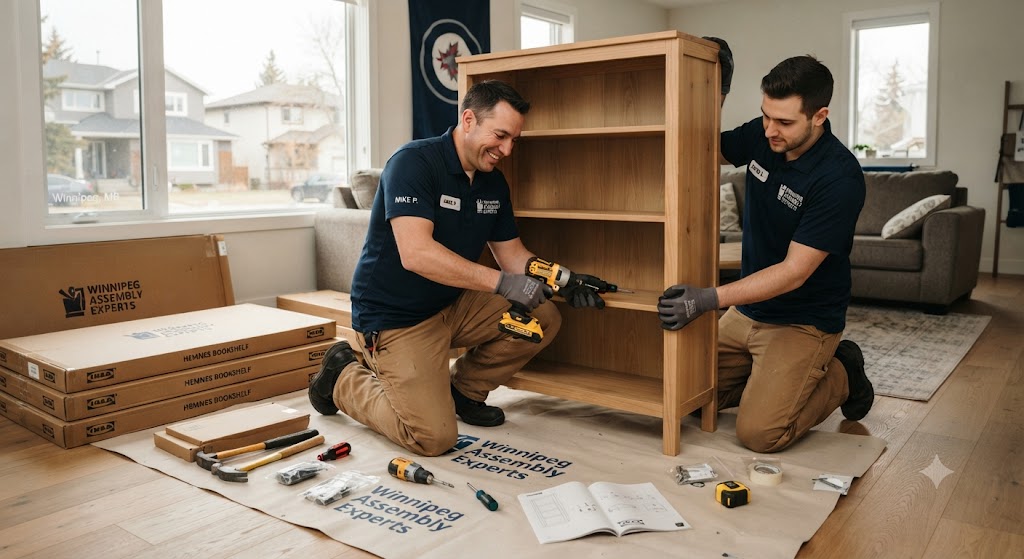
When a new bed, a new dresser, a new desk, a new dining table or a new shelving unit arrives the last thing most Winnipeg homeowners want is to spend hours sorting screws and studying instructions. Reliable furniture assembly in Winnipeg services can take that work off your plate. Make sure your furniture is put together safely and correctly. Swift Mover helps Winnipeg residents with furniture assembly support for homes, apartments, co ndos, offices and other spaces. Whether you searched for a furniture assembly near me or need help with a furniture delivery, the goal is simple: get the job done carefully without turning your weekend into a DIY project. Who offers reliable furniture assembly in Winnipeg? A reliable furniture assembly service in Winnipeg should do more than just show up with a toolbox. You need a team that truly knows how furniture should be handled, put together, placed in the spot and checked over before the job is done. This is especially important when dealing with items, like beds, wardrobes, desks, cabinets, dining tables and big shelving units. Swift Mover focuses on service and careful handling. They help homeowners who’d rather not spend time figuring out furniture assembly. Instead they leave it to movers who know what they’re doing. For people living in Winnipeg choosing a company that understands homes and moving challenges can make the whole process smoother and less stressful. Why do Winnipeg homeowners hire furniture assembly help? Furniture assembly may seem easy at first. The moment you open the box things change. Furniture assembly often includes parts, a few types of screws confusing diagrams and pieces that must stay in place while another piece is put on. One small mistake in furniture assembly can make the piece loose, uneven or hard to use. That is when professional help for furniture assembly becomes an idea. A dependable furniture assembly winnipeg service can save time, frustration and help you avoid damaging the new furniture during furniture assembly. Furniture assembly is especially useful, after moving into a home putting together a childs room furnishing an apartment or replacing several pieces at the same time. What furniture can be assembled? Most household furniture arrives in pieces and these pieces can be assembled when the right tools and instructions are available. Common examples include: Beds and bed frames Dressers and nightstands Desks and office furniture Dining tables and chairs Bookshelves Cabinets TV stands Wardrobes Storage furniture Shelving systems A bed assembly service can be especially helpful because beds often contain frame sections, support pieces, bolts, slats and other hardware. If you are also clearing out household furniture Swift Mover offers Furniture Removal Winnipeg as part of its larger moving and removal services. Can furniture delivery and assembly be handled together? Yes, combining furniture delivery and assembly can be an option when the customer is bringing several large items into the home. By arranging furniture delivery separately from furniture assembly the customer can look for a service that understands both furniture handling and furniture setup. This can be useful when furniture is heavy, awkward to carry or needs to be moved through hallways, stairways or apartment entrances. The key is to confirm what the service includes before the appointment. The customer should ask whether furniture delivery, carrying, furniture assembly, packaging removal and placement are part of the service being requested. What should you look for in a furniture assembly service near me? If you search for a furniture assembly service near me, do not choose a company only because it appears first in search results. Look for a local business that communicates clearly, explains the service, handles furniture carefully, and has experience with the type of furniture you need assembled. A good service should also be straightforward about what it can and cannot assemble. Reviews can help, but so can the quality of the conversation before booking. If a company answers questions clearly and understands your requirements, that is a good starting point. The federal Office of Consumer Affairs recommends researching a company, checking reviews, and reading a contract carefully before signing. What is the simple furniture assembly process? A good furniture assembly process in Winnipeg does not need to be complicated. Tell the company what you need Share the type and number of furniture pieces. Mention if the furniture is still boxed or already inside the property. Confirm the location Let the team know where the furniture needs to be assembled. Stairs, elevators, tight hallways, and small rooms can affect how the work is handled. Prepare the furniture Keep the furniture, hardware, and manufacturer’s instructions together whenever possible. This helps prevent delays. Assemble carefully The furniture is put together according to the manufacturer’s instructions, with attention to alignment and stability. Check the finished piece Before the job is complete, the assembled furniture should be checked so that important connections are secure and the item is ready for normal use. How can you protect yourself when hiring a local service? Choosing a local furniture assembly Winnipeg provider should still involve basic consumer awareness. Ask what the service includes, confirm the appointment details, and keep any written agreement or receipt. If something does not look right, raise the concern with the company first. Manitoba’s Consumer Protection Office provides information for consumers and explains ways to resolve problems with businesses. You can also review the Government of Canada consumer contract guidance before agreeing to a service. It recommends reading contracts carefully, understanding your responsibilities, and researching the company. For Winnipeg families, local knowledge is another useful advantage. A company familiar with apartments, condos, houses, offices, and storage spaces can better understand the practical challenges that come with moving and setting up furniture. If you need a place to keep furniture between moves or during a home project, Swift Mover also offers Storage Solutions. Why choose Swift Mover for furniture assembly? Swift Mover takes a straightforward approach to furniture assembly. The focus is on careful handling, clear communication, and getting furniture properly set up

Looking for an Affordable Winnipeg Moving Company?
If you’re looking for an affordable Winnipeg moving company, choose a mover that offers transparent pricing, reliable service, and flexible moving options. Shop around among local moving companies to get the best rate. Don’t forget to inquire about packing, loading, moving, unloading, and any extra charges; you won’t want any surprises on moving day! A moving firm in Winnipeg should also have favorable reviews from customers and have an insurance policy that will secure your possessions while you are moving. What Does a Winnipeg Moving Company Actually Do? The majority of moving companies provide so much more than loading a truck. The baseline involved with a typical Winnipeg Moving Company includes loading, transport and the unloading, and many will even provide packing supplies, furniture disassembly and even a brief storage facility. Some only do local moves and others do long distance moves in Manitoba. Before calling around, it’s good to be aware of the services you require to avoid any unpleasant surprises. How Do You Find a Reliable Winnipeg Moving Company? Do the work first via the back door, as it were, with word of mouth. People who have recently moved are typically straightforward and direct when they come to you for advice and information, telling you who they liked and who they didn’t like. Don’t believe a single review, look at a few. A reputable Winnipeg Moving Company will possess a business licence, insurance, and physical address to verify in addition to a phone number and website. What Problems Do People Run Into When Booking Movers? There are a number of common problems. The first is vague estimates, which is when a quote for the phone changes at the time of the truck’s arrival. Request a written estimate using an inventory list or video walk through. The second is that it is seasonal—available only during certain times, particularly month-end. For better rates and more choice, book 2-4 weeks in advance, earlier in the summer. The third is the lack of understanding about what is covered by insurance. Directly ask questions about liability and what if it’s damaged on the way? A good company doesn’t skirt around the question but rather tells you what it is. There are also some people who experience schedule conflicts between their move-out and move-in times. A reliable Winnipeg Moving Company will establish your exact time frame, while adding a little extra just in case, so you don’t have anywhere to store your belongings. How Do You Evaluate a Moving Company Step by Step? Begin by compiling a shortlist of 3-5 companies, based on recommendations and reviews. Then, ask for written quotes from them, preferably after an in-home or video exam instead of a phone exam. Don’t compare quotes on prices alone as one company might include packing materials in the quote and another company might not. Next, inquire about insurance and necessary paperwork. Once that, verify a business address and license, most legitimate operators will readily provide this information. Last but not least, ensure you read the contract carefully, and take note of the cancellation policies, as well as any additional charges for stairs, extra distance travelled or bulky goods with a Winnipeg Moving Company. What Should Winnipeg Residents Know Before Moving Day? Local weather is more influential in Winnipeg’s logistics than commonly thought. Here, extra time and the confirmation of walkways being cleared are more important than in milder climates because of icy sidewalks and shorter daylight hours during the winter moves. Moving season is in the summer, so it is better to book early for preferred moving dates. One of the things that you want to know before you’re confirmed is where you’re going to park. If a building doesn’t have dedicated loading space, older neighbourhoods with narrow streets may require a temporary permit for a moving truck; please contact the City of Winnipeg. When moving into or out of an apartment, it’s also Important to double check the elevator scheduling with the building owner to avoid delays. When moving to another part of the country into Manitoba, some address changes are processed federally. The Canada Revenue Agency‘s page on moving expenses and address change is a good place to begin to make sure tax and benefit information is up-to-date after moving. When comparing full-service options, it’s helpful to consider the services of residential moving companies `that offer packing, loading, and moving in a single package, as arranging multiple companies to work in unison can be quite complex. This type of service is usually not provided separately by moving companies in Winnipeg, but rather the Winnipeg movers include it in their house or apartment moving package. Once you know what to compare, finding the right Winnipeg Moving Company won’t be a complicated process. Request written quotes, verify insurance coverage, verify licenses and plan for the moving season. With preparation, most common booking headaches can be easily avoided. Frequently Asked Question Is it cheaper to move in winter or summer in Winnipeg? Moves are often less expensive since demand drops outside summer, though cold weather can add complications like icy walkways. Summer is more popular and pricier. Comparing quotes across both seasons helps you weigh cost against convenience. How far in advance should I book a mover? Two to four weeks ahead is a reasonable minimum, though six to eight weeks is safer during summer or month-end. Booking earlier also gives you more flexibility to negotiate your preferred date and time. Do I need a parking permit for a moving truck in Winnipeg? It depends on your street and building. Older neighbourhoods sometimes require a temporary permit through the City of Winnipeg. Checking a few days ahead avoids a last-minute scramble. What should be included in a moving estimate? A solid estimate should list labour, transport, packing materials if needed, insurance coverage, and extra charges for stairs or long carries. Ask for this in writing, based on a walkthrough, so there are no surprises later. Moves are often less expensive since demand
Can a Storage Company Help With Moving and Storage?
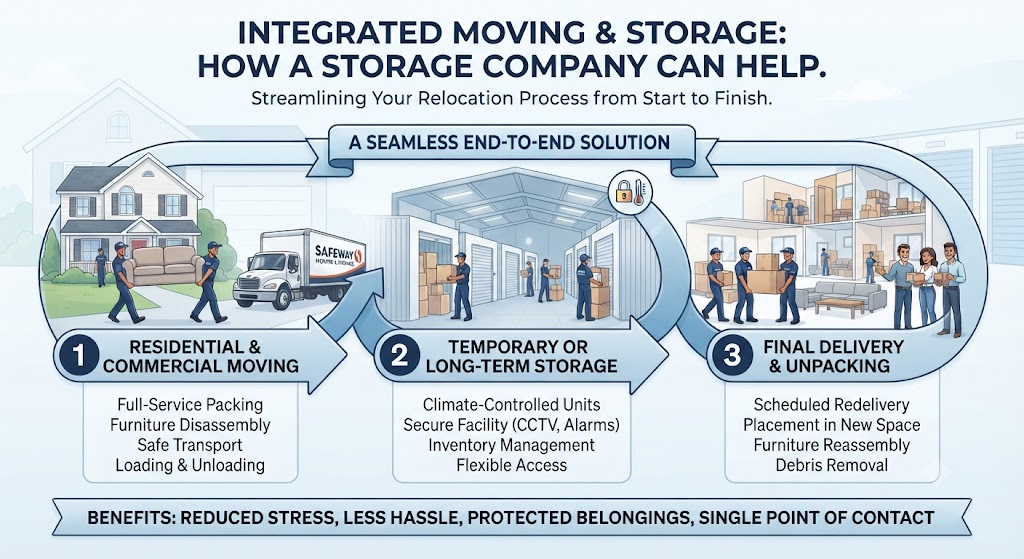
Yes, a local moving and storage companies can absolutely help with both moving and storage, but only if it’s set up to handle the two together. Astorage solutions that only rents units won’t touch your furniture or drive a truck. What you actually want is a storage company that also moves your things in and out, so you’re not coordinating two separate businesses on one stressful day. Swift Mover works this way. We pack, move, and store under one plan, so your belongings stay with the same crew from your old front door to the storage unit and back out again. This matters because every time your items change hands, there’s a chance something gets scratched, misplaced, or delayed. A moving and storage that also moves you cuts that risk down to almost nothing. If your timeline has any kind of gap in it, this is the simplest way to handle it. Why Would Someone Need a Storage Company During a Move? Most people don’t plan for storage. It just becomes necessary partway through the process. Maybe your closing date got pushed back. Maybe your new place is smaller and you need somewhere to keep furniture until you sort through it. Maybe you’re moving for work and your family is following a few weeks later. None of these situations are unusual. A storage company exists exactly for these in-between moments, when your stuff needs somewhere safe to sit while your life catches up to your moving truck. It’s not a failure of planning. It’s just how moving actually works for a lot of families. What Makes a Good Storage Company Different From a Basic Storage Unit? A lot of people think renting a storage unit and hiring a storage are the same thing. They’re not. Here’s what separates a proper storage solutions from a plain storage locker: They pack and move your things, not just store them Your items are wrapped and labeled properly before they’re stored The same team handles pickup and delivery, so nothing gets mixed up They can tell you honestly how your belongings are being kept They treat short term storage and long term storage differently, based on your actual needs A basic storage unit just gives you space and a lock. A real storage solutions gives you a plan. Swift Mover was built to be the second kind, because families need more than an empty room with four walls. How Does Working With a Storage Company Actually Work? This is the part people worry about most, mainly because they’ve never done it before. It’s simpler than it sounds. Tell us your timeline. Whether you need two weeks of storage or two months, we build the plan around your actual move-out and move-in dates. We pack with storage in mind. Boxes and furniture headed to storage get wrapped a little differently than items going straight into your new home. Everything moves into secure storage. Your things go straight from the truck into a proper unit, tracked the whole way, not left sitting somewhere overnight. We deliver when you’re ready. No rebooking, no new company, no repeating your address and details to a stranger. The same crew brings everything to your new place. That’s the whole process. One move in storage company, one crew, one plan from start to finish. Does a Storage Company Only Help With Big Moves? Not at all. People assume storage is only useful for long distance moves or major life changes, but it helps just as much with everyday situations. If you’re downsizing and your new place can’t take all your furniture right away, a public storage gives you breathing room instead of forcing a rushed decision about what to keep. It also helps during renovations, when rooms need to be emptied out for weeks at a time. Or during a short gap between leases, where your old place needs to be cleared before your new one opens up. In all these cases, the value isn’t just storage space. It’s having one storage company handle the packing, the move, and the storage together, so you’re not managing three different timelines on your own. If you’re comparing options, it’s worth looking into proper storage solutions built around real moving timelines, rather than a plain rented unit with no support attached to it. Why Local Experience Actually Matters Here A removal and storage based outside your city doesn’t know your streets, your building rules, or what a Winnipeg winter does to moving schedules. Local experience changes how smoothly things go. Swift Mover is a Winnipeg-based team, which means we know how building elevators get booked, how parking permits work on moving day, and how weather can shift a plan with almost no warning. Trust also comes from handling the paperwork side of moving properly, not just the physical side. If you’re changing homes, it’s worth updating your address through Canada Post’s official change of address service so your mail, bills, and important documents follow you without any gap. A moving containers and storage that cares about your whole move will remind you of small steps like this, because we’ve seen what happens when families forget them during a busy week. Frequently Asked Questions Is hiring a storage company more expensive than renting a unit myself? Not usually. When packing, moving, and storage come from one storage company, you avoid paying separately for a truck rental, a storage facility, and moving labour. Most families find it simpler and more cost effective overall. How long can I keep my things with a storage company? As long as you need. Some families only need a few days between homes, others need months during a renovation or delayed closing. A good public storage builds the plan around your timeline instead of a fixed rule. Will my furniture be safe in storage over winter? Yes, as long as the storage company handles wrapping and placement properly. Fragile items, wood furniture, and electronics need extra care during Winnipeg winters,