

Choose reliable movers in Winnipeg by checking customer reviews, confirming insurance coverage, and requesting a written estimate. A trustworthy moving company should have experience with local moves, transparent pricing, and a professional team that handles your belongings carefully. Compare at least three moving companies, ask about additional fees, and verify their business information before booking. Avoid movers who ask for large upfront deposits or refuse to provide written quotes. The best movers offer clear communication, punctual service, and positive feedback from Winnipeg customers, helping ensure a smooth, safe, and stress-free moving experience. Why Does Choosing the Right Mover Feel So Stressful? Because it is personal. You are not just moving boxes. You are trusting a stranger with your grandmother’s china, your kid’s crib, and the couch you saved up for. A lot of Winnipeg families have a story about a move gone wrong, a delayed truck, a scratched dresser, or a company that vanished after taking a deposit. That worry is fair. Knowing how to choose reliable movers in Winnipeg means you stop guessing and start checking facts instead of hoping for the best. The good news is that reliable movers are easy to spot once you know what to look for. It usually comes down to a handful of habits that honest companies share, and a handful of warning signs that dishonest ones cannot hide for long. Learning how to choose reliable movers in Winnipeg is really just learning to notice these small details early. What Makes a Moving Company Reliable? A reliable mover is upfront, insured, and easy to reach before you sign anything. Here is what separates the good ones from the risky ones. They give you a written estimate, not a guess over the phone. A company that quotes your whole move without seeing your home or asking real questions is guessing. Reliable movers, including Swift Mover, walk through your inventory first, either in person or over video, so the estimate actually matches your move. They carry proper insurance. Ask directly whether your belongings are covered while in transit. A company that hesitates or changes the subject is telling you something. They have a real local address and phone number. Winnipeg movers who have served the city for years usually have a physical presence you can visit, not just a website and a call centre. Their reviews sound like real people. Look past the star rating. Read a few reviews closely. Do people mention specific crew names, specific neighbourhoods, or specific problems that got solved? That is a good sign the reviews are genuine. How Do You Check If a Mover Is Legitimate? Start with a quick background check before you ever pick up the phone. Search the company name plus “complaints” or “reviews” and read the most recent ones first. Ask for their business licence number and confirm it if the company seems new to you. Check whether the company is registered and whether any consumer complaints are on file with Manitoba’s Consumer Protection Office, which handles disputes between Manitoba consumers and local businesses. Ask how long they have operated in Winnipeg specifically, not just Canada in general. Request references from a recent local move, ideally from your own neighbourhood or a similar building type. This small bit of homework takes fifteen minutes and saves you from the movers who only look good on paper. It is one of the most practical parts of how to choose reliable movers in Winnipeg, and most people skip it simply because nobody told them to check. What Questions Should You Ask Before Booking? Ask these before you sign anything, and pay attention to how quickly and clearly they answer: Is the estimate binding or subject to change on moving day? Who is liable if something breaks? What happens if the move takes longer than planned? Are the movers your own employees or subcontractors? What is your cancellation policy? A company confident in its own process will answer all five without dancing around the question. Vague answers, especially about liability and subcontractors, are the biggest red flag in the whole process. A Simple Step-by-Step Process for Choosing Your Mover You do not need a complicated system. Follow these steps in order and you will land on a mover you can trust, and you will have a clear, repeatable answer to how to choose reliable movers in Winnipeg every time you move. Make a shortlist of three Winnipeg movers. Pull names from recent reviews, local Facebook groups, or a quick search for Local Moving Winnipeg services near your neighbourhood. Request a written estimate from each one. Insist on an in-home or video walkthrough so the number is accurate, not a rough guess. Confirm insurance and licensing for each company. A two-minute phone call is enough to settle this. Compare communication, not just cost. Notice who responds fast, answers clearly, and treats your questions with patience. Book early and get everything in writing. Confirm the date, the crew size, and the total cost in an email or contract before moving day. That is the whole process. Five steps, no guesswork, and a much calmer moving week. Why Local Trust Matters When Choosing Movers in Winnipeg Winnipeg has its own quirks. Narrow older streets in Wolseley, tight stairwells in Osborne Village walk-ups, winter driveways that ice over fast, and long hauls out to communities like Selkirk or Steinbach. A mover who actually knows the city handles all of that without missing a beat. That local knowledge is exactly why so many Winnipeg families keep coming back to Swift Mover. Years of local moves mean the crew already knows which streets get tricky in January, how to protect hardwood in a century-old character home, and how to load a truck so nothing shifts on the Perimeter Highway. That kind of experience cannot be faked with a slick website. It shows up in how smoothly the actual move day goes. When you are learning how to choose reliable movers in Winnipeg, local experience

How to Find the Best Local Movers in Winnipeg
The best local movers in Winnipeg are licensed, insured, experienced, and have strong customer reviews. Start by comparing at least three moving companies, checking their Google reviews, confirming their insurance coverage, and asking for a written estimate before booking. A good local moving company should offer transparent pricing, reliable scheduling, and professional movers who can safely handle your furniture and belongings. Why Does It Feel So Hard To Find A Good Local Mover? You search online and every company looks the same. Same stock photos. Same promises. No way to tell who actually shows up on time and who leaves you waiting by the window. This is a real problem, not just bad luck. Winnipeg has dozens of movers, and not all of them are local in any real sense, some are just a call centre forwarding your job to whoever’s available that day. Once you know what to look for, this gets a lot easier. That’s the whole point of learning how to find the best local movers in Winnipeg instead of just picking the first result you click on. Most people only figure out how to find the best local movers in Winnipeg after a bad experience with a company that didn’t know the city at all. You don’t have to learn it that way. A bit of checking now saves real frustration later. What Should You Actually Check Before Booking? Start with reviews that mention specific parts of the city. A comment about a move from St. James or a condo downtown tells you far more than a generic five-star rating with no details. Next, ask for a written quote, not a rough number given over the phone. It should reflect your actual home size, any stairs, and the distance between your old place and your new one. Third, ask directly how long the company has worked in Winnipeg. A mover with real years here knows the shortcuts, the parking rules, and which buildings need an elevator booked ahead of time. Finally, confirm what happens if something gets damaged. A trustworthy local mover explains their insurance process clearly, without making you dig for the answer. These four checks are really the core of how to find the best local movers in Winnipeg. They take maybe twenty minutes and can save you days of stress down the road. How Do You Compare Local Movers Without Wasting Time? Get three quotes and place them side by side. Check what’s actually included, not just the final number. Some movers add charges for stairs or heavy furniture that others build into the price upfront. If one quote looks much cheaper than the rest, ask why before getting excited. A lower price often means less care for your belongings once the truck is loaded. This comparison step is really the heart of how to find the best local movers in Winnipeg. You’re not just shopping for a price, you’re choosing who handles your home and your time on moving day. What Does A Simple, Reliable Process Look Like? A good local move follows a clear pattern from start to finish. Here’s what that looks like in practice. Book a home visit or video walkthrough so your quote matches your actual home. Read your written estimate closely and ask about anything unclear before signing. Confirm your moving date and time window in writing, not just over the phone. Pack a personal bag with documents, medication, and anything you don’t want on the truck. Walk through your home with the crew before loading starts, room by room. Check every closet and storage space during a final walkthrough before the truck leaves. Inspect your items as they’re unloaded at your new place before the crew goes. If a company skips steps like the home visit or written quote, that’s usually where hidden charges start creeping in later. This kind of steady process is another part of how to find the best local movers in Winnipeg. A mover who follows clear steps usually has nothing to hide from you. Why Does A Truly Local Team Make Such A Difference? There’s a real gap between a company that’s local on paper and one that actually knows Winnipeg. A local team knows which lanes in Wolseley get tight for a moving truck. They know which condo buildings in downtown Winnipeg need an elevator booking in advance. They’ve probably already moved someone on your block. Swift Mover has built its reputation this way, treating every Winnipeg move with the same care whether it’s a small apartment near the University of Manitoba or a family home in East Kildonan. That kind of local knowledge means fewer surprises and a crew that already understands how this city works. If you’re moving within the city rather than across the country, this local focus matters even more. The local moving Winnipeg team at Swift Mover handles these shorter moves with the same attention as a bigger relocation, since a move across town still deserves care with your belongings. This local focus is really what how to find the best local movers in Winnipeg comes down to in the end. Always ask a company directly whether they’ve handled moves like yours in this specific city. A Quick Note On Address Changes And Records Once your move is done, there’s paperwork to handle beyond just unpacking boxes. The federal government has a straightforward process for updating your address with programs like the Canada Revenue Agency and Employment Insurance after a move, which many Winnipeg families forget to do right away. You can find the full checklist on the Government of Canada’s change of address page so nothing important gets sent to your old place. Keeping your written moving quote alongside this paperwork also helps if any questions come up about your move later. Conclusion Moving locally still means packing up your whole life, even if the new place is only a few kilometres away. The mover you choose affects how calm or stressful that

How To Choose The Right Moving Company
Choose the right moving company by checking reviews, comparing quotes, and confirming insurance coverage. A reliable mover should have experience, transparent pricing, and positive customer feedback. Ask for a written estimate that clearly includes labor, transportation, and any additional charges. Make sure the company is licensed, insured, and able to handle your type of move, whether residential or commercial. Avoid movers who ask for large upfront deposits or refuse to provide written details. Compare at least three local companies before making a decision. Choosing an experienced and trustworthy moving company can help protect your belongings and make your move easier and less stressful. What Should You Actually Look For Before You Book? Start with reviews, but read past the star rating. Look for patterns. If five different people mention broken items or hidden fees, that’s not bad luck, that’s how the company operates. Next, ask for a written quote, not a number over the phone. A real mover will send an estimate based on your home size, distance, and any stairs or elevators involved. Verbal quotes are where surprise charges come from. Third, check how long the company has been running in your area. A mover with years of local experience in your city knows the buildings, the parking rules, and the traffic patterns that can slow down a move. Finally, ask about insurance coverage for your items. If something breaks, you want to know exactly what’s covered before it happens, not after. These four checks are really the heart of how to choose the right moving company. They take maybe twenty minutes of your time and can save you days of stress. How Do You Compare Quotes Without Getting Confused? Get at least three quotes. Lay them side by side and check what’s actually included, not just the bottom line. Some movers charge extra for stairs, heavy items, or packing materials that others include for free. If one quote is far lower than the rest, that’s usually a warning sign, not a deal. Movers cutting corners on price often cut corners on care too. This is where how to choose the right moving company gets practical. You’re not just picking a number, you’re picking who handles your furniture, your family photos, and your time off work. What Does A Simple Moving Process Look Like? A good move doesn’t need to be complicated. Here’s what a straightforward process should look like from start to finish. Get a home visit or video walkthrough so the quote is accurate, not a guess. Read the written estimate carefully and ask questions about anything unclear. Confirm your moving date and time window in writing, not just a phone call. Pack a personal essentials bag with documents, medication, and valuables you’ll carry yourself. Walk through your home with the crew on moving day before they start loading. Do a final check of every room, closet, and drawer before the truck leaves. Confirm delivery and unload and inspect your items as they come off the truck. If a mover skips steps like the home visit or the written estimate, that’s your sign to keep looking. Skipping steps is usually how surprise charges sneak in. This simple process is another piece of how to choose the right moving company. A mover who follows clear steps is usually a mover who has nothing to hide. Why Does Choosing A Local Mover Matter? There’s something different about hiring a team that actually lives and works in your city. They know which streets have parking restrictions. They know which buildings need a booked elevator. They’ve likely moved your neighbour, your coworker, or your kid’s teacher. Swift Mover has built its name on this kind of local trust, showing up for families across Manitoba and beyond with the same care whether it’s a small apartment or a full house. That local knowledge saves time on moving day and cuts down on the guesswork that out-of-town companies often get wrong. Local reputation is one of the most overlooked parts of how to choose the right moving company, yet it’s often the most reliable one. If your move involves a business rather than a home, the approach changes too. Office moves need different equipment, timing outside business hours, and careful handling of computers and files. The commercial moving Winnipeg team at Swift Mover works this way, treating office relocations as their own category rather than squeezing them into a standard home move. This is also part of how to choose the right moving company for anything beyond a basic house move. Ask directly whether the company has handled a move like yours before, whether that’s a condo with one small elevator or a full office floor. While this isn’t a place to talk numbers, it’s worth knowing that moving expenses can sometimes be claimed on your taxes if your move meets certain conditions set by the Canada Revenue Agency, such as moving for work or school. Keep your receipts and your written quote from your mover, since you may need them later. You can check the current rules directly on the Government of Canada’s moving expenses page before you file. Keeping that paperwork also protects you if there’s ever a dispute about what was agreed to on moving day. It’s one more small habit that fits into how to choose the right moving company the right way, from the first quote to your final tax records. Conclusion Moving is personal. It’s not just furniture on a truck, it’s your home, your routine, and your family’s sense of stability for a few stressful weeks. Getting this right matters more than most people expect until something goes wrong. How to choose the right moving company really comes down to trust, proof, and a bit of patience before you sign anything. Check the license, read real reviews, get everything in writing, and pick a team that knows your city. Do that, and moving day becomes something you get through calmly, not something you dread for

Why Professional Packing Services Save You Money
Moving is exhausting, and packing is usually the part that breaks people. If you’re asking whether packing services are worth the cost, the short answer is yes for most Winnipeg families, because trained packers work faster, protect your belongings better, and cut down the hidden costs of a slow, stressful move. The real savings come from fewer broken items, less time off work, and a moving day that actually stays on schedule. What Do Packing Services Actually Include? A good packing service is not just someone showing up with boxes. It usually covers full-home packing, room-by-room organizing, wrapping fragile items like dishes and mirrors, labeling boxes by room, and sometimes unpacking on the other end too. Some Winnipeg families choose partial packing, where the crew only handles the kitchen or the basement, while the rest of the house is done by hand. The point is flexibility. Packing services can scale up or down depending on your timeline, your budget, and how much of the work you actually want to hand off. Why Do Winnipeg Families Struggle With DIY Packing? Here’s the honest truth. Most people underestimate how long packing takes. A three bedroom house can easily take four or five full days to pack properly, and that’s if nothing goes wrong. Add kids, pets, work schedules, and a Winnipeg winter that doesn’t care about your moving date, and things fall apart fast. We hear the same story constantly. A family starts strong on Monday, feels confident, then by Thursday they’re throwing things in garbage bags at midnight because the truck comes in the morning. Nothing gets labeled. Boxes get overpacked. Glassware ends up wrapped in bath towels because the bubble wrap ran out two rooms ago. This is exactly where packing services change the outcome. A trained team knows how much a box should weigh, which items need double wrapping, and how to build a truck load that doesn’t shift during transport. It’s not magic, it’s just repetition and experience. How Do Packing Services Save You Money? This is the part people don’t expect. Packing services aren’t really an added cost, they’re a way to avoid other costs that sneak up on you. Think about what a slow move actually costs. An extra day with the moving truck. A day of unpaid leave from work. Replacing a shattered TV or a cracked dish set that wasn’t wrapped properly. Rebooking movers because the house wasn’t ready when the crew arrived. All of that adds up faster than the packing service itself. Professional packers also use fewer boxes overall because they pack tighter and smarter, which cuts down on supply costs. And because everything is labeled clearly, unloading takes a fraction of the time, which matters if you’re paying movers by the hour. The Fear of Broken or Lost Belongings Nobody wants to open a box on the other end and find a broken picture frame or a missing charger cable. That fear is real, and it’s one of the biggest reasons people put off packing until the last possible day. The solution is simple structure. Professional packing services use proper materials for fragile items, cushion corners on furniture, and keep an inventory so nothing quietly disappears into the wrong box. When everything is documented as it’s packed, there are no surprises when it’s unpacked. Not Having Enough Time Before Moving Day Life doesn’t pause for a move. Work deadlines, school pickups, and everyday errands don’t disappear just because you’re relocating in two weeks. This is the number one reason packing gets pushed to the last 48 hours, and that’s when mistakes happen. Handing packing over to a professional crew gives you back your evenings. Instead of spending every night wrapping plates, you’re finishing work, checking on the kids, or actually sleeping. That time matters more than people expect until they get it back. Physical Strain and Injury Risk Packing is physical work. Bending, lifting, twisting to fit boxes into odd corners, and hauling heavy items up and down stairs adds up. Back strain and pulled muscles are common during a DIY move, and they tend to show up right when you need your body the most. A trained packing crew is used to the physical demands and knows how to lift and move safely. That protects your health and keeps your move on schedule instead of stalling because someone tweaked their back on day two. The Simple Process Behind Professional Packing Services Here’s roughly how it works from start to finish. A quick walkthrough or phone call to understand the size of your home and your timeline. A packing plan is built around your moving date, whether that’s full packing or just certain rooms. The crew arrives with proper materials, boxes, tape, wrapping paper, and furniture blankets. Each room gets packed and labeled clearly, so unloading is straightforward. Everything is loaded in an order that protects fragile items and keeps the truck balanced. That’s it. No guesswork, no last minute panic, no mystery boxes labeled “misc” that you’ll be confused by for the next six months. Are Packing Services Worth It for Local Moves? Yes, even for a short move across the city. People assume packing services only make sense for long distance relocations, but a local move still involves the same fragile items, the same furniture, and the same risk of things breaking if they’re rushed. If you’re moving across Winnipeg, a local moving winnipeg crew that also handles packing can turn a two week stress project into a two day job. Distance isn’t really the factor that matters here, it’s the amount of stuff and how carefully it needs to be handled. Businesses face this too. Office moves involve equipment, files, and furniture that need to be packed with real care, which is why many companies rely on a dedicated Commercial Moving Winnipeg team rather than asking staff to pack around their regular workday. How Do You Know a Packing Service Is Trustworthy? A Local Trust Guide Trust
Estate Cleanout Services Winnipeg: Everything You Need to Know
Losing a loved one is hard enough. Then you walk into their home and see decades of belongings staring back at you. Who do you call for estate cleanout services Winnipeg families can actually trust? This guide answers that question in plain language, with no confusing steps and no pressure, so you can make a calm decision during a hard time. What Are Estate Cleanout Services? Estate cleanout services Winnipeg families call on help clear out a home after a death, a move into care, or a downsizing. A crew comes in, sorts through everything, removes what isn’t needed, sets aside items for family or donation, and leaves the space empty and clean. It’s not just hauling junk. It’s handling someone’s life with respect. Why Do Families in Winnipeg Need This Kind of Help? Grief and paperwork already take up all your energy. Add a house full of furniture, old letters, kitchen drawers, and a garage nobody has touched in years, and it becomes too much for one person to carry alone. That’s the real reason estate cleanout services Winnipeg residents search for exist. You shouldn’t have to do this by yourself. You Don’t Know Where to Start Standing in a childhood home, or a parent’s apartment, with boxes everywhere and no clear plan feels paralyzing. Every drawer holds a memory, and every memory slows you down. The fix is simple. A cleanout crew brings a system. They sort room by room, label what stays, what goes to family, what gets donated, and what gets hauled away. You just point and decide. No guessing, no wasted weekends. You’re Grieving and Exhausted at the Same Time Sorting through a parent’s closet or a spouse’s desk brings up feelings you didn’t expect. Physical labour on top of emotional weight wears people down fast, and many folks end up putting it off for months. This is exactly what good estate cleanout services Winnipeg providers offer. They move at your pace, they’re gentle with sentimental items, and they give you space to step back when it gets heavy. You stay in control of what matters, they handle the rest. There’s a Deadline You Didn’t Ask For Landlords want the unit empty. A sale is closing. A lease is ending in two weeks. Pressure from timelines makes an already painful process feel rushed and cold. This is where booking early pays off. Reliable estate cleanout services Winnipeg crews can usually work around tight closing dates, weekend availability, or move-out deadlines, so you’re not scrambling the night before keys are due back. You Don’t Know What’s Worth Keeping Old furniture, tools, dishes, photo albums, tax records going back years. It’s hard to know what has value, what a charity will take, and what simply needs to go. A cleanout team can flag items worth donating or selling before anything hits the truck, so nothing valuable gets tossed by mistake. How Does an Estate Cleanout Actually Work? (Simple Steps) Most estate cleanout services Winnipeg families use follow the same easy process, so there’s no mystery once you make the call. You call or send photos. A quick chat or a few pictures of the space gives the crew an idea of the job size. A walkthrough or virtual estimate happens. No pressure, just an honest look at what’s involved. A plan is set. You decide what stays with family, what’s donated, and what’s removed. The crew sorts and packs. Items get grouped by category, room by room. Everything gets hauled out. Furniture, appliances, and clutter are removed and disposed of responsibly. The space is left broom clean. Ready for sale, rental, or handover. That’s it. No hidden extra visits, no confusing paperwork on your end. Why Choose a Local Winnipeg Team? When you’re comparing estate cleanout services Winnipeg options, hiring someone who actually knows the city matters more than people realize. A local crew understands Winnipeg neighbourhoods, knows which donation centres are nearby, and can navigate apartment buildings, elevators, and parking rules across the city without wasting your time. They also tend to show up when they say they will, because their name in the community depends on it. If the same family is also moving, downsizing, or clearing out a business property, many of these crews handle more than cleanouts. Some also offer commercial moving Winnipeg support for offices closing down an estate-owned business, local moving Winnipeg help for family members relocating after a loss, and office moving Winnipeg services when a family business needs to be wound down alongside the home. Having one team that understands the whole picture saves you from repeating your story to five different companies. What Happens to Items That Aren’t Kept? Good estate cleanout services don’t just dump everything in a landfill. Usable furniture and household goods often go to local charities and reuse centres. Electronics and hazardous materials are handled through proper disposal channels rather than tossed with regular trash. If you’re unsure about rules around disposing of certain items, the City of Winnipeg’s waste and recycling guidelines are a helpful public resource for understanding what can be donated, recycled, or needs special handling. Do I Need to Deal With Taxes or Legal Paperwork Too? Cleanout services don’t handle estate law, but it helps to know what’s expected of you as an executor or family member. The Government of Canada publishes a straightforward guide on what to do when someone has died, covering everything from notifying agencies to estate and tax matters, which many families find useful to read before or during a cleanout, since some paperwork and records need to be kept aside before the house is cleared. A Word on Trust Winnipeg is a tight-knit city, and that shapes how people choose estate cleanout services Winnipeg families recommend to each other. Word travels fast when a company treats a grieving family poorly, and it travels just as fast when they do right by someone. Look for a crew with real reviews, a physical presence in the
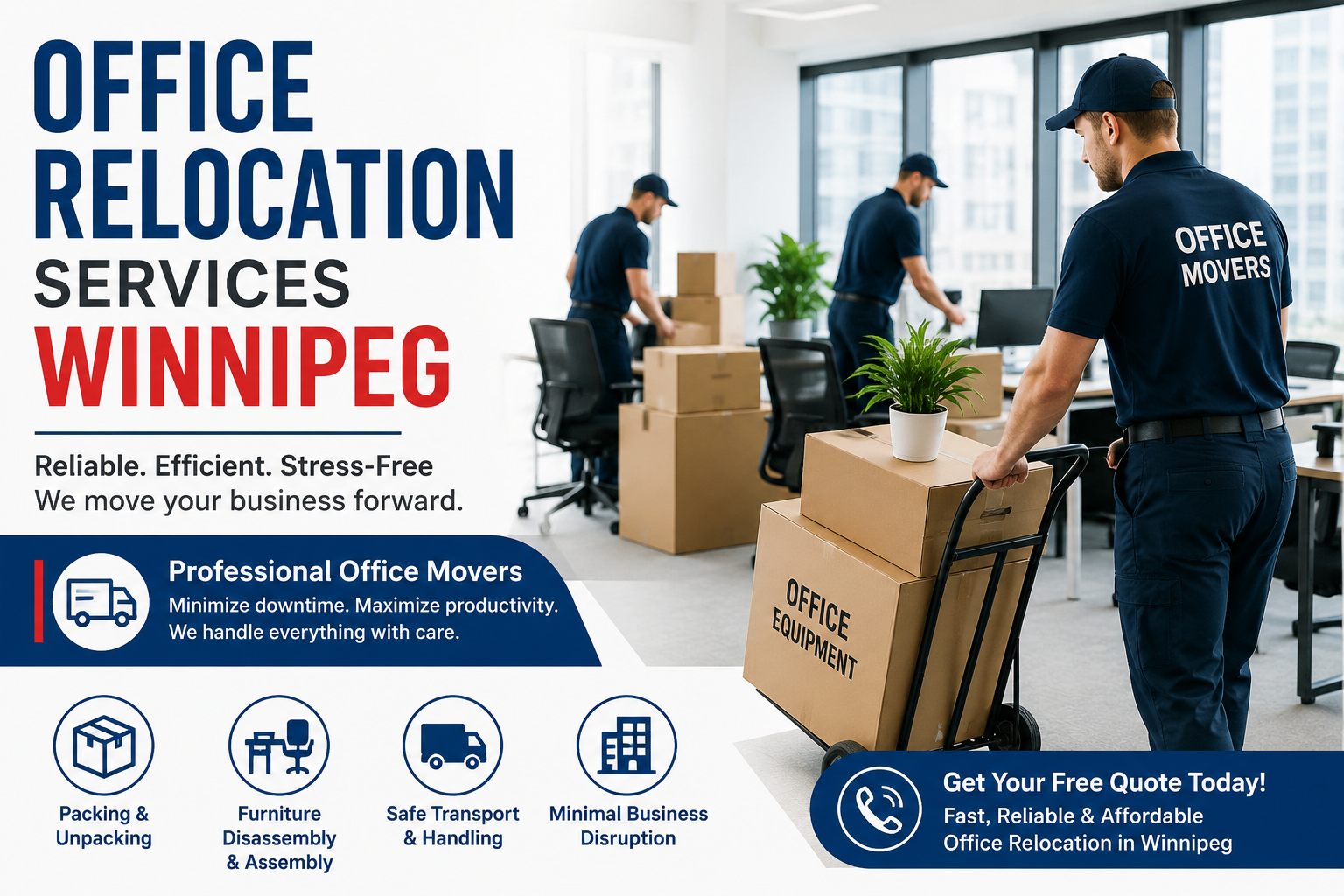
Office Relocation Services Winnipeg: What Businesses Need to Know
Moving your company to a new address is stressful, and most owners want one simple answer: what do Office Relocation Services in Winnipeg actually cover, and will they keep my business running while the move happens? In short, good movers handle packing, IT equipment, furniture, transport, and setup, so your team can work almost normally on both ends. Here is what to expect, what usually goes wrong, and how to plan it right the first time. What Do Office Relocation Services in Winnipeg Actually Include? Most people picture a moving truck. That is only a small piece of it. Office Relocation Services in Winnipeg usually cover far more ground than a home move because businesses cannot afford downtime. A proper service includes: Packing and labeling desks, files, and electronics Safe handling of computers, servers, and monitors Furniture disassembly and reassembly Transport with insured, trained crews Setup at the new site so staff can sit down and work Some companies also offer weekend or after-hours moves, so employees walk into a fully working office on Monday morning instead of a pile of boxes. Why Do Winnipeg Businesses Struggle With Office Moves? Here is the honest part. Office moves fail not because of trucks or boxes, but because of poor planning around people and time. Owners often underestimate how long packing takes. Staff get pulled off real work to pack their own desks. IT equipment gets unplugged without labels, and nobody remembers which cable goes where. Then the new space is not ready, so furniture sits in a hallway for two days. We get it. You are trying to run a business, not manage a move. That stress is normal, and it is exactly why Office Relocation Services in Winnipeg exist. A team that moves offices every week already knows the mistakes to avoid, because they have seen them play out dozens of times. The fix is simple: bring in people who treat the move as the job, not as an extra task squeezed between meetings. How Do Office Relocation Services in Winnipeg Reduce Downtime? Downtime is the real cost of a bad move. Every hour your team cannot work is an hour you are paying for nothing. Experienced Office Relocation Services in Winnipeg reduce downtime by working in phases instead of one chaotic day. They pack non-essential items first, weeks ahead. They move IT racks and phone systems last, right before staff arrive, so systems stay live as long as possible. They also label everything by department, so unpacking at the new site does not turn into a treasure hunt. For businesses that only need help within the city, a local moving winnipeg crew can often complete the whole job in a single weekend, which keeps disruption to a minimum. What Pain Points Do Growing Companies Face During a Move? Growing businesses face a different problem than small startups. You have more equipment, more staff, and more furniture, but the same tight deadline to be operational. Common pain points include: Servers and shared printers that cannot go offline for long Meeting rooms full of screens and cables with no clear owner Staff worried about losing files or personal items during transit Landlords giving a short window to vacate the old space Every one of these is fixable with a plan. The solution is not more stress on your team, it is handing the physical work to a crew trained for commercial moving winnipeg businesses rely on, while your staff focuses on clients and daily tasks. This is where professional Office Relocation Services in Winnipeg earn their value, since they handle the equipment and timing questions you do not have time to solve on your own. What Is the Simple Step Process Behind a Smooth Office Move? A move does not need to be complicated. Most Office Relocation Services in Winnipeg follow the same basic process, and knowing the steps ahead of time helps you spot a company that actually has a plan. Here is the process that works, broken into plain steps. Walkthrough and plan – A mover visits or reviews your space and builds a timeline around your business hours. Pack early, pack smart – Non-urgent items get packed and labeled by room, days or weeks before the move date. IT and equipment handling – Computers, servers, and phones are disconnected, protected, and tracked so nothing is lost. Moving day – Furniture and boxes are loaded, transported, and delivered to the new site with a checklist. Setup and unpack – Desks, chairs, and equipment are placed where your team needs them, ready to use. Businesses that want the whole job handled from start to finish, including furniture and desk setup, usually look for full office moving winnipeg support rather than piecing it together themselves. Why Trust a Local Winnipeg Team With Your Office Move? Local knowledge matters more than people expect, and it is one of the biggest reasons businesses choose local Office Relocation Services in Winnipeg over a national chain. A Winnipeg-based crew knows the tight loading docks downtown, the elevator booking rules in older buildings, and which routes get slow during rush hour on Portage Avenue or near the Perimeter Highway. They also understand winter. Ice on a loading ramp in January is a real safety issue, and local crews plan around it instead of learning the hard way. There is also a paperwork side many owners forget. When your business address changes, you need to update it with the Canada Revenue Agency so your tax records, GST account, and payroll stay accurate. You can find the steps for this directly through the official CRA business address update page, which is worth doing in the same week as your physical move so nothing slips through the cracks. Choosing a local team also means faster response if something changes last minute, like a delayed lease handover or a building access issue. You are not waiting on a call center hours away. Conclusion Moving a business is never just

How to Move Heavy Furniture Without Damage?
Your couch scrapes the doorframe. Your dresser leaves a scratch on the hardwood. Your back hurts before the truck is even loaded. If you are searching for how to move heavy furniture without damage, you already know the stress is real, and the fear of ruining a wall, a floor, or a family heirloom is even worse. The good news is that with the right prep, tools, and order of steps, most damage is completely avoidable, even for a full house move in a Canadian winter or a tight apartment hallway. This guide walks through the real, tested answer to how to move heavy furniture without damage, using steps that work in small apartments, walk-up houses, and everything in between. What Actually Counts as “Heavy Furniture”? Think sofas, sectionals, wardrobes, dressers, dining tables, bookshelves, and appliances like fridges or washers. Anything that needs two people, a dolly, or straps to shift safely falls into this category. Knowing this helps you plan tools and manpower before moving day instead of guessing halfway through. Why Does Moving Furniture Cause So Much Damage? If you want to move heavy furniture without damage, start by understanding why damage happens in the first place. Here is the honest truth. Most damage does not happen because people are careless. It happens because they rush. A tight staircase, a narrow hallway, or an awkward angle at the door catches people off guard, and that is when walls get dented and furniture gets scratched. If you have ever felt that stomach-drop moment when a couch corner catches drywall, you are not alone. Almost every Canadian homeowner has a story like this. The fix is simple once you understand it. Learning how to move heavy furniture without damage is really about slowing down, measuring first, and protecting the pieces that matter before you ever lift a single item. How Do You Move Heavy Furniture Without Damage? This is the part everyone wants answered fast, so here it is in plain language. Measure doorways, hallways, and staircases before moving day Disassemble what you can, like table legs, bed frames, and shelving units Use moving blankets, not bedsheets, to wrap corners and edges Slide furniture on sliders or old towels instead of dragging it Lift with your legs, not your back, and always bend knees together Keep floors covered with cardboard or moving mats along the main path None of this needs fancy equipment. Most of it costs very little and saves you from expensive repairs later. What Tools Actually Prevent Damage? Choosing the right tools is half the battle when you want to know how to move heavy furniture without damage. You do not need a warehouse of gear. A furniture dolly, moving straps, corner protectors, and stretch wrap cover almost every situation. Straps are especially useful for stairs because they let two people carry weight on their shoulders instead of their arms, which reduces the chance of dropping something heavy mid-flight. Getting these tools ready ahead of time is one of the easiest ways to answer how to move heavy furniture without damage on the actual day. Is It Safe to Move Heavy Furniture Alone? Honestly, it depends on the piece. A dresser or small bookshelf, maybe. A sectional sofa or a fridge, no. Moving alone is one of the biggest causes of injury and property damage combined, because one person cannot control the balance or angle of a heavy object on their own. If a piece feels awkward to lift by yourself, that feeling is your body telling you to wait for help. Understanding how to move heavy furniture without damage also means understanding the hidden costs people forget about until moving day arrives. The Pain Point Nobody Talks About: Damaged Rental Deposits If you rent, this one hits hard. A single wall scuff or a dented door frame can cost you part of your damage deposit. This is one of the quiet financial risks of moving day that people forget until it is too late. The solution is easy though. Protect doorframes with old towels or moving blankets taped gently in place, and always carry furniture upright through tight spaces instead of tilting it toward the wall. The Pain Point Nobody Talks About: Back and Joint Injuries Furniture does not just damage floors and walls, it damages bodies too. Lower back strain is one of the most common injuries during a move, and it usually happens because someone twists while lifting instead of turning their whole body. Slow down, keep the item close to your torso, and always communicate with your lifting partner before taking a step. This small habit alone helps you move heavy furniture without damage to your body, not just your belongings. Simple Step-by-Step Process to Move Heavy Furniture Without Damage Here is the process broken down so it feels manageable, not overwhelming. Plan the path first. Walk the route from the furniture to the truck and clear anything in the way. Protect the furniture. Wrap corners and legs in moving blankets and secure with stretch wrap. Protect your home. Lay down floor runners or cardboard along doorways and hallways. Disassemble where possible. Remove legs, shelves, and drawers to reduce weight and width. Use the right equipment. Dollies for flat surfaces, straps for stairs, sliders for hardwood or tile. Lift together. Count out loud, lift with your legs, and move slowly through tight turns. Load the truck smart. Heaviest items go in first, against the wall, secured with straps so nothing shifts in transit. This is genuinely how to move heavy furniture without damage in almost every home, from a small apartment to a full family house. Why Local Experience Matters When Learning How to Move Heavy Furniture Without Damage Winnipeg homes have their own quirks. Older character homes often have narrow staircases and low doorframes, while newer builds have tight condo elevators and strict building rules about moving hours. A crew that regularly handles furniture moving Winnipeg jobs already knows these layout

Top 10 Mistakes to Avoid When Moving in Winnipeg
It’s 7 PM the night before moving day, and a Winnipeg family is staring at a pile of unlabeled boxes, a half-loaded truck, and a toddler who refuses to nap. Sound familiar? Every spring and fall, hundreds of local families learn the hard way which moving mistakes cost the most time, money, and patience. The Top 10 Mistakes to Avoid When Moving in Winnipeg almost always come down to the same root causes: poor timing, weak planning, and underestimating our weather. The good news is that every single one of these mistakes is avoidable once you know what to watch for. What Are the Most Common Mistakes Winnipeg Families Make When Moving? Moving across the city, or even just across the Perimeter Highway, brings out the same handful of problems again and again. Narrow back lanes in older neighbourhoods like Wolseley, tight parking near Osborne Village, and our famous freeze-thaw cycles all add pressure that families in flatter, milder cities rarely deal with. Leaving everything until the last weekend. It feels like there’s plenty of time until there suddenly isn’t. Most families underestimate how long packing actually takes once you account for work, kids, and life getting in the way. Start sorting room by room at least three weeks before your move date, even if it’s just an hour a night. Skipping a written inventory. Boxes disappear, furniture gets left behind, and nobody remembers which box has the kettle. A simple numbered list, even on paper, saves hours of searching later and helps you spot anything missing once you’re unpacked. Choosing movers based on price alone. A rock-bottom quote can turn into a stressful day if the crew is understaffed or unfamiliar with your building’s rules. Ask how many movers will show up and how they handle large or awkward items before you book anything. Packing fragile items with whatever box is on hand. Thin boxes and newspaper feel fine until something breaks on the drive over. Dishes, glassware, and electronics need proper padding and sturdy boxes, not leftover liquor store containers. Forgetting Winnipeg’s weather entirely. A move that looks easy on paper can turn rough fast if you’re carrying boxes through October slush or a January cold snap. Always check the forecast a few days out and have a backup plan if conditions turn. Getting ahead of these five issues already puts you well ahead of most of the Top 10 Mistakes to Avoid When Moving in Winnipeg, and the next batch is just as easy to fix once you know they’re coming. What Other Mistakes Catch People Off Guard During a Winnipeg Move? These next few are the ones people rarely think about until they’re already happening on moving day. Not measuring doorways, hallways, and stairwells. That couch fit through the door once, but the new place might have a tighter turn or a lower ceiling in the stairwell. Measure your biggest pieces and the openings before move day, not during it. Underestimating travel time across the city. Bishop Grandin, the Disraeli, and downtown construction can turn a quick drive into a long wait. Build extra time into your schedule, especially if you’re moving during rush hour or a long weekend. Forgetting to update your address before move day. Bills, bank cards, and important mail can end up at your old address for weeks if you wait too long. Canada Post’s mail forwarding service is a simple way to make sure nothing important slips through the cracks while you settle in. Not protecting floors and walls in character homes. Older homes in River Heights or Crescentwood often have original hardwood and tighter staircases. Hardwood scratches and wall dings happen fast without floor runners or corner guards in place. Trying to handle everything alone instead of asking for help. Pride costs more than people expect, both in sore backs and in broken items. Bringing in experienced packing and moving support for even part of the job often saves an entire weekend instead of costing one. Together, these ten issues make up the most common Top 10 Mistakes to Avoid When Moving in Winnipeg families run into, year after year, no matter which neighbourhood they’re leaving or heading to. How Can You Avoid the Top 10 Mistakes to Avoid When Moving in Winnipeg in Four Simple Steps? Once you know the Top 10 Mistakes to Avoid When Moving in Winnipeg, the fix comes down to a short, repeatable process. Step 1: Start three weeks early. Sort one room at a time. Donate or toss anything you haven’t touched in a year. Step 2: Build a simple inventory. Number your boxes and keep a short list of what’s inside each one. It takes ten minutes and saves hours later. Step 3: Update your address everywhere that matters. Set up mail forwarding through Canada Post, then update your driver’s licence, banks, and any subscriptions tied to your old address. Step 4: Build in a weather buffer. Check the forecast, plan for slower roads, and have gloves or boot trays ready depending on the season. Why Do Winnipeg Families Trust Local Moving Knowledge? Anyone can lift boxes. Knowing this city is a different skill. Local crews understand which downtown buildings require elevator bookings, which condo boards have strict move-in windows, and which older homes in Wolseley or St. Boniface have narrow staircases that need extra care. That local knowledge also covers the practical stuff: which streets turn into ice rinks in January, where parking enforcement is strict near Osborne Village, and how to plan a move around a Jets game or a long weekend without getting stuck in traffic. Families across Winnipeg keep coming back to movers who know these small details, because they’re the difference between a smooth day and a stressful one. That’s also why understanding the Top 10 Mistakes to Avoid When Moving in Winnipeg matters just as much as hiring the right help. Local knowledge and good planning work best together. Make Your Next Winnipeg Move Mistake-Free Moving
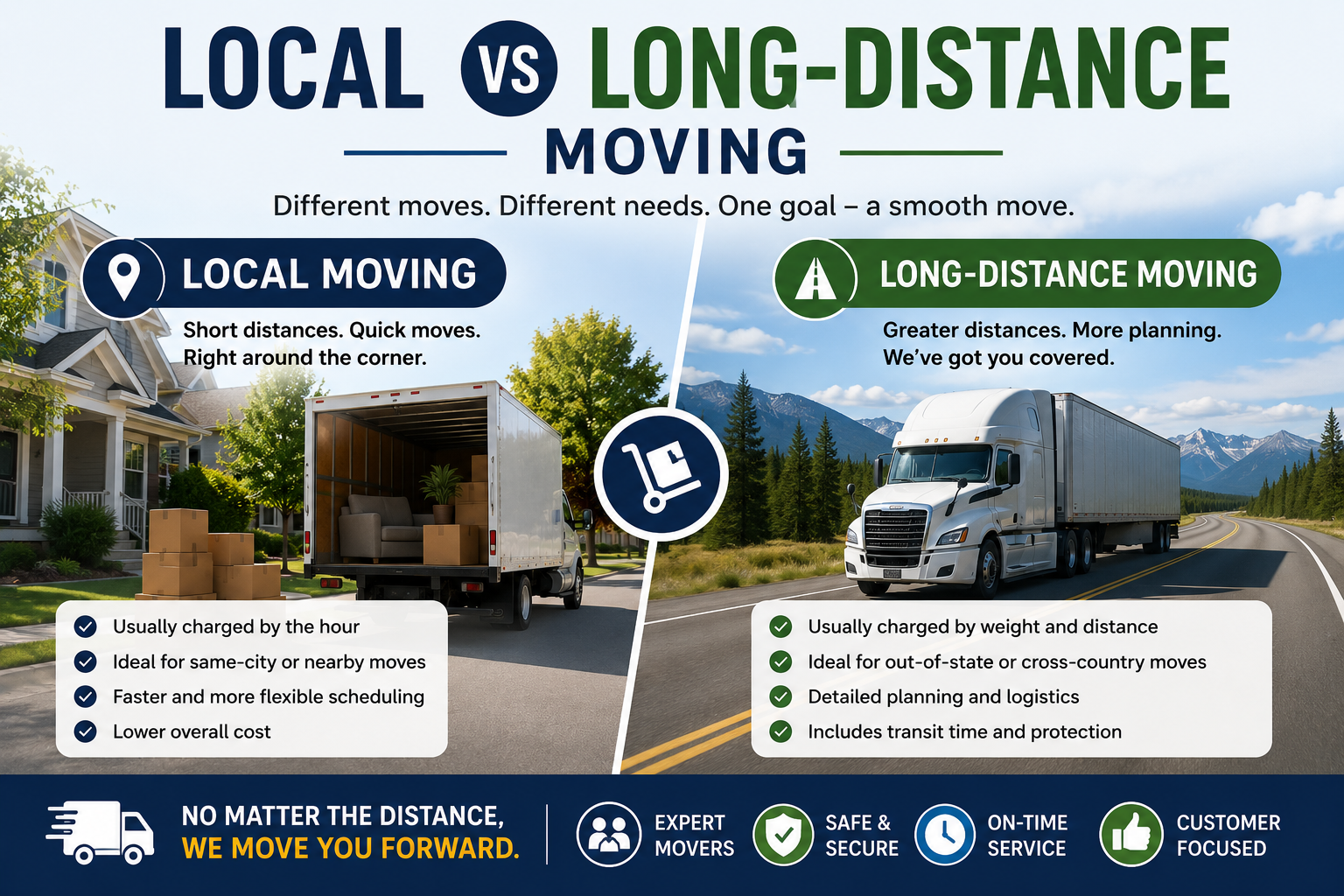
Local vs Long-Distance Moving Costs in Winnipeg
Last spring, a family in St. Vital started packing for what they thought would be a simple move across Winnipeg. Two weeks later, they were staring at a bill that was almost double what they expected — because nobody told them the difference between how local moves and long-distance moves are actually priced. If you’re planning a move anywhere in or out of Winnipeg, this guide is written so that never happens to you. What Is the Difference Between a Local and Long-Distance Move in Winnipeg? This is the question most people forget to ask before they book anything. In Canada, a local move generally means you’re staying within the same city or within roughly 50 to 80 kilometres. So moving from Transcona to River Heights? Local. Moving from Winnipeg to Brandon, or from Winnipeg to Toronto? That’s long-distance — sometimes called an interprovincial or out-of-province move if you’re crossing a provincial boundary. Why does this matter so much? Because the entire pricing structure changes. Local moves in Winnipeg are almost always billed by the hour. Long-distance moves are billed by weight, distance, or a combination of both. Two completely different systems. Two completely different ways to budget. Understanding this upfront saves families hundreds — sometimes thousands — of dollars in surprises. How Are Local Moving Costs Calculated in Winnipeg? Local moving services in Winnipeg work on an hourly rate. You pay for the time the crew is working, from when they show up at your door to when the last box is placed in your new home. Several things affect how many hours your local move takes: The size of your home. A one-bedroom apartment in the Exchange District moves much faster than a four-bedroom house in Linden Woods. Every extra room adds time — usually 45 minutes to over an hour per room once you count the loading, transport, and unloading. How prepared you are. Movers who arrive to find nothing packed lose time fast. Every hour of professional time spent packing boxes or wrapping furniture instead of moving it adds to your final bill. Elevator or stair access. Buildings in Winnipeg’s downtown core and older neighbourhoods often have narrow stairwells or single elevators. That slows everything down. Distance between your two addresses. Even within the city, moving from Sage Creek to Wolseley is a longer drive than moving between two streets in River Park South. That windshield time counts. Parking and building access. If a moving truck can’t park close to the door, the crew carries everything farther. That adds up. Most Winnipeg local moves land somewhere between two and eight hours depending on these factors. Getting a proper in-home estimate — rather than a quick quote over the phone — gives you a much more accurate picture. With local moving Winnipeg, Swift Mover offers walkthroughs so your quote reflects your actual home, not a generic guess. How Are Long-Distance Moving Costs Calculated From Winnipeg? Long-distance moves operate on a completely different model. Here, the two biggest cost drivers are weight and distance. Movers weigh the truck before and after loading your belongings. That weight difference is your shipment weight, and it becomes the base of your bill. Then that number is multiplied by the distance in kilometres to your destination. Moving from Winnipeg to Calgary? That’s roughly 1,300 kilometres. Winnipeg to Vancouver is closer to 2,300 kilometres. Winnipeg to Toronto is around 2,100 kilometres. Each of those distances, applied to the weight of a three-bedroom home’s worth of furniture, gives you a very different number. Other long-distance costs to keep in mind: Packing materials and services. Many families choose professional packing for long moves because their belongings are in transit longer and need more protection. Storage in transit. If your new home isn’t ready when the truck arrives, your items go into storage. This is common in long-distance moves, and it adds cost. Fuel surcharges. Longer routes mean higher fuel costs, and most moving companies include this as a line item. Delivery windows. Long-distance moves rarely arrive on a single confirmed day. There’s usually a delivery window — sometimes several days wide. If you need a guaranteed delivery date, expect to pay extra for it. Liability and valuation coverage. For a short local move, basic coverage is often fine. When your dining table travels 2,000 kilometres, you want to think harder about full replacement value coverage. The Government of Canada’s Consumer Affairs resources outline your rights around carrier liability — it’s worth reading before you sign anything. For families heading out of Manitoba, long-distance moving Winnipeg through Swift Mover includes binding estimates so you know what you’re paying before the truck leaves your driveway. What Factors Make Moving Costs Go Up — Regardless of Distance? Some costs catch people off guard whether they’re moving three kilometres or three provinces over. Here are the ones that matter most: Specialty items. Pianos, gun safes, large antiques, and oversized furniture require special equipment and handling. These are always quoted separately. Time of year. May through August is peak moving season in Winnipeg. Crews are busier, availability is tighter, and rates are often higher. If you can move in late September, October, or even February, you’ll likely have more flexibility — and sometimes better rates. Last-minute bookings. Planning your move two to four weeks ahead gives you the best shot at a good crew and a realistic timeline. Booking within a few days of your move date limits your options significantly. Packing service add-ons. Full-pack services where the crew packs every item in your home cost more than partial-pack (where you pack most things yourself and the crew handles fragile items). Both are options. Choose based on your time and budget. Disassembly and reassembly. Beds, large bookshelves, sectional sofas — these often need to come apart to get through doors or onto a truck. If you don’t want to do this yourself, factor in the time and labour cost. What Should You Do Before Booking Any Moving Service in

Commercial Moving Checklist for Winnipeg Businesses: What Nobody Tells You Before Moving Day
You booked the movers. You told your team. You even ordered new business cards with the new address. Then moving day arrived — and absolute chaos broke out. The server room wasn’t labelled. Half the staff showed up to the old location. And someone left the boardroom chairs behind. Sound familiar? This commercial moving checklist for Winnipeg businesses exists because of exactly these moments. Whether you’re relocating a small downtown office or moving an entire warehouse operation across the city, the difference between a smooth move and a costly disaster comes down to one thing — preparation. What Should a Commercial Moving Checklist for Winnipeg Businesses Include? A solid commercial moving checklist for Winnipeg businesses covers everything from your first planning meeting to your first full day operating at the new location. It’s not just about packing boxes. It’s about protecting your business continuity, your equipment, your staff, and your client relationships — all at the same time. Here’s what that looks like in practice. How Far in Advance Should Winnipeg Businesses Start Planning a Commercial Move? Start at least 60 to 90 days out. If you’re a larger operation — a medical office, a multi-floor business, or a company with specialized equipment — give yourself four to six months minimum. Winnipeg businesses often underestimate lead time. Permits, elevator bookings in commercial buildings, IT vendor scheduling, and seasonal weather windows all need coordination. A commercial moving checklist for Winnipeg businesses that starts 90 days early gives you room to solve problems before they become emergencies. Here’s the phase-by-phase breakdown: 90 Days Out Assign a move coordinator inside your team. One person needs to own this project. Form a short checklist of every department’s unique needs — IT, reception, storage, kitchen, server room. Start getting quotes from commercial moving companies that specialize in business relocations, not just residential moves. Also register or update your business address with the Canada Revenue Agency at that point. CRA keeps your GST/HST account, payroll, and corporate accounts tied to your registered address — updating it early avoids delays with tax filings and government mail. You can update your business address directly through the CRA My Business Account portal. 60 Days Out Notify your landlord in writing — check your lease for required notice periods. Coordinate with your new building’s management about elevator access, loading dock hours, and parking availability for moving trucks. Book your office moving Winnipeg date. Good commercial moving companies in Winnipeg fill up fast, especially between May and September. Don’t assume you can book a week before. Create a master floor plan of your new space. Where does each department sit? Where does the server rack go? Where are the printer stations? Having this answered before moving day eliminates chaos on the day itself. 30 Days Out Send a formal change-of-address notice to every vendor, supplier, client, and service provider. Canada Post offers a business mail forwarding service — set that up as a safety net, but don’t rely on it as your main communication plan. Update your Google Business Profile, website, social media, and any industry directories with your new Winnipeg address. Audit your inventory. This is the moment to get rid of equipment that’s outdated, furniture that doesn’t fit the new space, or supplies that have been sitting in a storage room for two years. Donate, sell, or responsibly recycle — the City of Winnipeg has disposal resources through Winnipeg’s waste and recycling services that businesses can access. Two Weeks Out Start labelling everything — not just with a room name, but with a specific location. “Server Room — Rack A” is more useful than “IT.” Color-code by department if that helps your movers. Confirm all move-day logistics: truck arrival time, staff roles, who has keys to the new building, who handles the old building lockup. Brief your team. They need to know what’s happening, what’s expected of them on move day, and what the first week at the new location looks like. Move Day Have your move coordinator on-site at both locations — or split that role between two trusted people. Walk through both spaces with Swift Mover’s crew lead before anything gets loaded. Point out fragile equipment, items requiring special handling, and anything that must be set up first at the new location. Take timestamped photos of equipment, furniture, and each room before loading — both for insurance purposes and to catch anything that may have been damaged in transit. Do not sign off on the move completion until you’ve done a full walkthrough of the new space and confirmed nothing is missing or damaged. First Week at the New Location Test all IT systems on day one — internet, phones, POS systems, security cameras. Issues discovered on day one are fixable. Issues discovered on day five cost you client trust. Update your address with Service Canada if you have employees — this affects Records of Employment and payroll records. You can make changes through My Business Account on Canada.ca. Communicate the move to your clients one more time. A short, direct email goes a long way. “We’ve moved. Here’s the new address. We’re fully operational.” That’s all it needs to say. What Makes Commercial Moving in Winnipeg Different from Residential Moving? Commercial moves involve stakeholders that residential moves don’t — employees, clients, vendors, and building management on both ends. They also involve equipment that’s expensive, fragile, or both. A single server rack move done wrong can cost more in data loss than the entire move cost. Winnipeg’s winters add another layer of complexity. If your move window falls between November and March, factor in cold-weather risks for electronics, vehicle delays, and the physical challenge of moving heavy equipment on icy loading docks. A commercial moving checklist for Winnipeg businesses written for our specific climate should include a weather contingency plan. What happens if a major snowstorm hits on move day? Have a backup date identified with your movers before you need it. How Do You Keep