
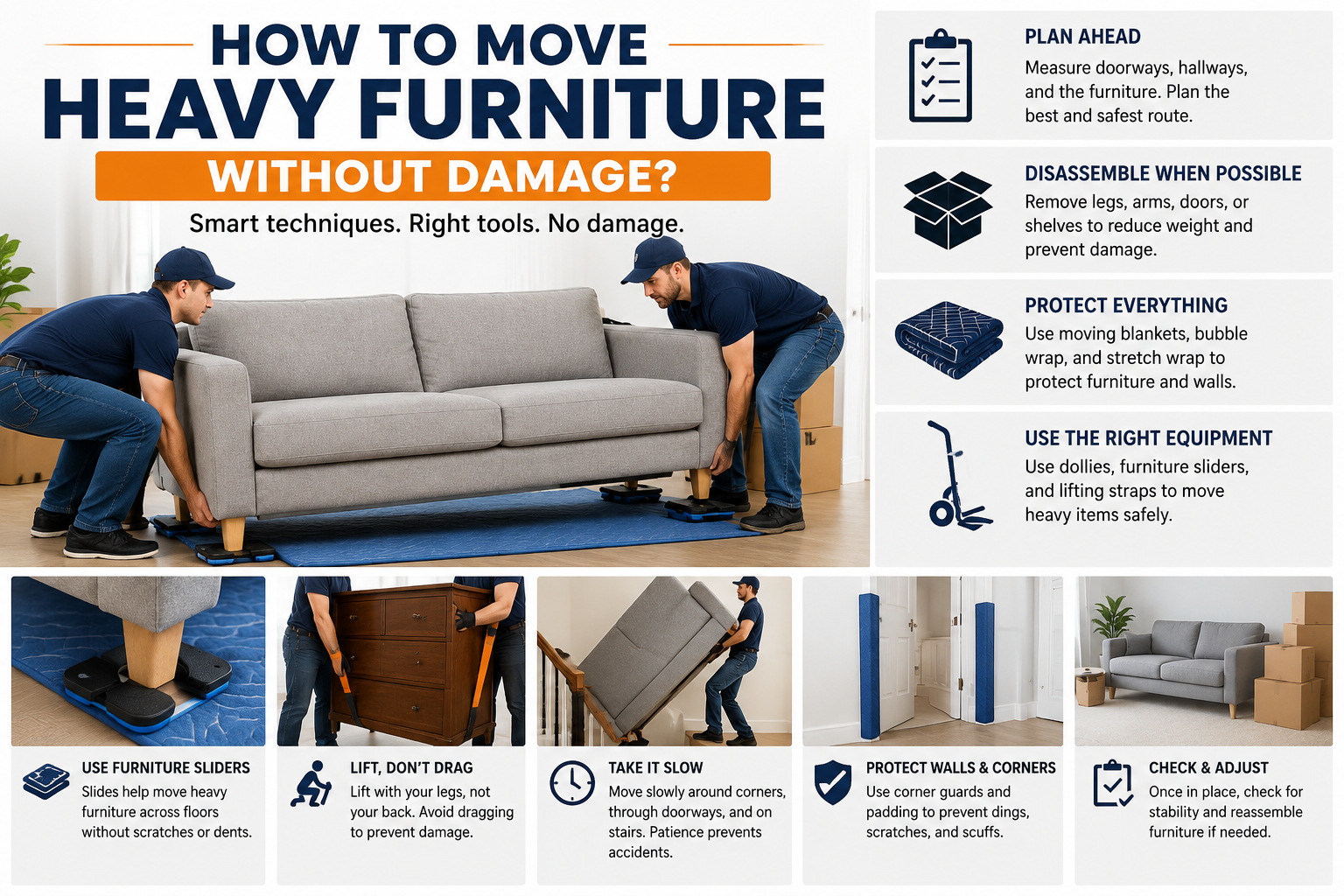
Your couch scrapes the doorframe. Your dresser leaves a scratch on the hardwood. Your back hurts before the truck is even loaded. If you are searching for how to move heavy furniture without damage, you already know the stress is real, and the fear of ruining a wall, a floor, or a family heirloom is even worse. The good news is that with the right prep, tools, and order of steps, most damage is completely avoidable, even for a full house move in a Canadian winter or a tight apartment hallway.
This guide walks through the real, tested answer to how to move heavy furniture without damage, using steps that work in small apartments, walk-up houses, and everything in between.
What Actually Counts as “Heavy Furniture”?
Think sofas, sectionals, wardrobes, dressers, dining tables, bookshelves, and appliances like fridges or washers. Anything that needs two people, a dolly, or straps to shift safely falls into this category. Knowing this helps you plan tools and manpower before moving day instead of guessing halfway through.
Why Does Moving Furniture Cause So Much Damage?
If you want to move heavy furniture without damage, start by understanding why damage happens in the first place. Here is the honest truth. Most damage does not happen because people are careless. It happens because they rush. A tight staircase, a narrow hallway, or an awkward angle at the door catches people off guard, and that is when walls get dented and furniture gets scratched. If you have ever felt that stomach-drop moment when a couch corner catches drywall, you are not alone. Almost every Canadian homeowner has a story like this.
The fix is simple once you understand it. Learning how to move heavy furniture without damage is really about slowing down, measuring first, and protecting the pieces that matter before you ever lift a single item.
How Do You Move Heavy Furniture Without Damage?
This is the part everyone wants answered fast, so here it is in plain language.
- Measure doorways, hallways, and staircases before moving day
- Disassemble what you can, like table legs, bed frames, and shelving units
- Use moving blankets, not bedsheets, to wrap corners and edges
- Slide furniture on sliders or old towels instead of dragging it
- Lift with your legs, not your back, and always bend knees together
- Keep floors covered with cardboard or moving mats along the main path
None of this needs fancy equipment. Most of it costs very little and saves you from expensive repairs later.
What Tools Actually Prevent Damage?
Choosing the right tools is half the battle when you want to know how to move heavy furniture without damage. You do not need a warehouse of gear. A furniture dolly, moving straps, corner protectors, and stretch wrap cover almost every situation. Straps are especially useful for stairs because they let two people carry weight on their shoulders instead of their arms, which reduces the chance of dropping something heavy mid-flight.
Getting these tools ready ahead of time is one of the easiest ways to answer how to move heavy furniture without damage on the actual day.
Is It Safe to Move Heavy Furniture Alone?
Honestly, it depends on the piece. A dresser or small bookshelf, maybe. A sectional sofa or a fridge, no. Moving alone is one of the biggest causes of injury and property damage combined, because one person cannot control the balance or angle of a heavy object on their own. If a piece feels awkward to lift by yourself, that feeling is your body telling you to wait for help.
Understanding how to move heavy furniture without damage also means understanding the hidden costs people forget about until moving day arrives.
The Pain Point Nobody Talks About: Damaged Rental Deposits
If you rent, this one hits hard. A single wall scuff or a dented door frame can cost you part of your damage deposit. This is one of the quiet financial risks of moving day that people forget until it is too late. The solution is easy though. Protect doorframes with old towels or moving blankets taped gently in place, and always carry furniture upright through tight spaces instead of tilting it toward the wall.
The Pain Point Nobody Talks About: Back and Joint Injuries
Furniture does not just damage floors and walls, it damages bodies too. Lower back strain is one of the most common injuries during a move, and it usually happens because someone twists while lifting instead of turning their whole body. Slow down, keep the item close to your torso, and always communicate with your lifting partner before taking a step. This small habit alone helps you move heavy furniture without damage to your body, not just your belongings.
Simple Step-by-Step Process to Move Heavy Furniture Without Damage
Here is the process broken down so it feels manageable, not overwhelming.
- Plan the path first. Walk the route from the furniture to the truck and clear anything in the way.
- Protect the furniture. Wrap corners and legs in moving blankets and secure with stretch wrap.
- Protect your home. Lay down floor runners or cardboard along doorways and hallways.
- Disassemble where possible. Remove legs, shelves, and drawers to reduce weight and width.
- Use the right equipment. Dollies for flat surfaces, straps for stairs, sliders for hardwood or tile.
- Lift together. Count out loud, lift with your legs, and move slowly through tight turns.
- Load the truck smart. Heaviest items go in first, against the wall, secured with straps so nothing shifts in transit.
This is genuinely how to move heavy furniture without damage in almost every home, from a small apartment to a full family house.
Why Local Experience Matters When Learning How to Move Heavy Furniture Without Damage
Winnipeg homes have their own quirks. Older character homes often have narrow staircases and low doorframes, while newer builds have tight condo elevators and strict building rules about moving hours. A crew that regularly handles furniture moving Winnipeg jobs already knows these layout challenges and plans around them instead of learning the hard way on your move day. That local knowledge is often the real difference between a smooth move and a damaged wall, and it is a big part of how to move heavy furniture without damage in a city with so many older homes.
The same goes for timing and routes. Whether it is a small apartment shuffle across town through local moving Winnipeg routes, or a full household relocation to another province through long distance moving Winnipeg logistics, local experience means fewer surprises, better planning, and less risk to your belongings.
For families planning a move, the Government of Canada’s address change page also walks through updating your records with federal departments and agencies, which pairs well with the physical planning covered here.
This is really the heart of how to move heavy furniture without damage. It is not one big secret, it is many small careful choices stacked together.
Trust Comes From Doing the Small Things Right
People do not trust a mover because of a fancy truck. They trust them because nothing gets scratched, nothing gets broken, and communication is honest from start to finish. If you want your team to move heavy furniture without damage, ask how they protect floors, how they handle staircases, and whether they wrap furniture before or after loading. A confident, clear answer tells you a lot about how careful that team will be with your home.
Conclusion
Moving heavy furniture without damage is not about luck. It comes down to a few honest habits: measuring your space, protecting corners and floors, using the right tools, and never rushing a tight turn. Canadian homes bring their own challenges, from narrow character-home staircases to strict condo elevator rules, but none of that is a problem once you plan ahead. Whether you are moving a single dresser down the hall or packing an entire house for a long trip across the province, the same simple rules apply. Slow down, protect what matters, and lift smart. That is really the whole secret behind how to move heavy furniture without damage, and it works every single time.
Frequently Asked Questions.
How do I move a heavy couch without scratching the floor?
Use furniture sliders under each leg or fold an old towel underneath and push instead of drag. This spreads the weight evenly and stops the fabric or wood from catching on the floor. Always clear the path first so you are not stopping and starting halfway through the room.
What is the safest way to carry furniture down stairs?
Use moving straps so the weight sits on your shoulders instead of your arms. One person leads facing forward, the other faces backward and calls out steps. Go slow, keep the furniture tilted slightly, and never rush a landing or turn on the staircase.
Can one person move heavy furniture alone?
Small pieces like nightstands or chairs, yes. Anything large like a sofa, wardrobe, or fridge really needs two people. Moving alone increases the chance of dropping the item, twisting your back, or damaging a wall because you cannot control the angle by yourself.
Do moving blankets actually prevent damage?
Yes, and they are one of the cheapest ways to protect furniture. Wrapping corners, edges, and legs in moving blankets absorbs bumps against doorframes and walls. Secure them with stretch wrap or tape so they stay in place during the entire carry.