
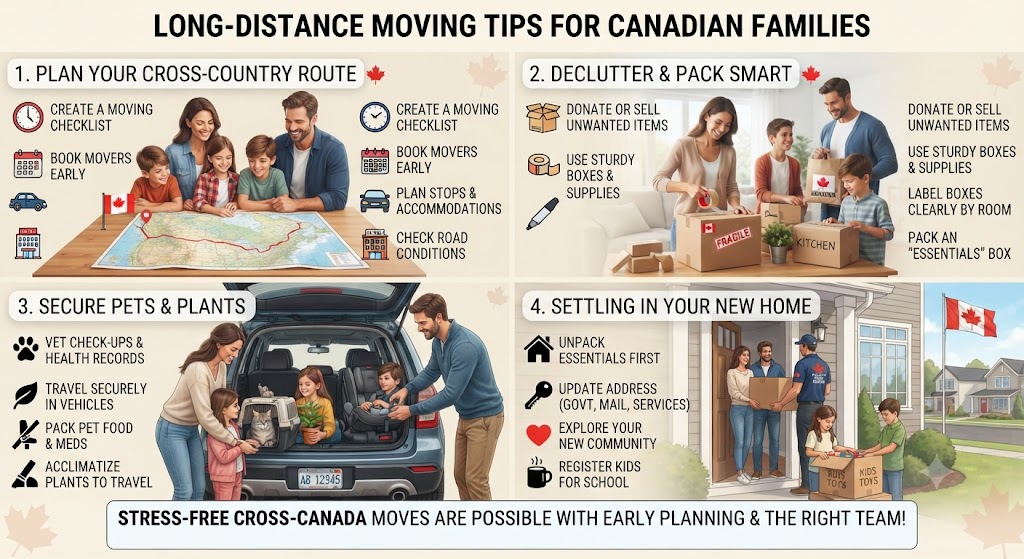
Moving to another province can be exciting, but it can also feel like a lot for one family to handle. There are boxes to pack, furniture to sort, travel plans to make, and a new home waiting at the other end. The best Long Distance Moving Tips for Canadian Families are simple: start early, reduce what you are taking, organize your belongings, choose a mover carefully, and keep important documents and valuables with you.
For a long-distance move, make a plan before packing begins. Create a household inventory, separate everyday essentials, confirm your moving arrangements in writing, and prepare both homes for moving day.
The Government of Canada’s Office of Consumer Affairs recommends checking movers carefully, getting moving terms in writing, creating an inventory, and confirming insurance and delivery details before the move.
Why does a long-distance move feel so difficult for families?
A long-distance move affects more than your furniture.
Children may be leaving friends and schools. Parents may be changing jobs. Pets need travel plans. Family members may also have different feelings about leaving a familiar home.
That is why Long Distance Moving Tips for Canadian Families should cover both the practical work and the people involved.
Give everyone a clear idea of what will happen and when.
Instead of trying to finish everything in one weekend, divide the move into smaller jobs.
That makes the process easier to follow and gives your family time to deal with unexpected problems.
What should Canadian families do first?
Start by sorting your belongings.
Walk through each room and decide what you will take, donate, sell, recycle, or remove.
Do not pack things simply because they are already in your home.
Fewer belongings can make packing and unloading easier.
Next, make a basic inventory.
List larger furniture, appliances, electronics, fragile belongings, and items that need special care.
The federal consumer guidance recommends a room-by-room household inventory and says movers should have enough information about the items being moved when preparing a quote.
When should you start preparing for a long-distance move?
Start several weeks before moving day whenever possible.
Pack items you rarely use first.
Seasonal clothing, decorations, books, spare dishes, and storage-room items can usually be packed early.
Keep daily essentials until later.
Label every box with the room and a short description.
“Kitchen – plates” is much more useful than simply writing “Kitchen.”
If you need help preparing belongings for a Winnipeg move, Packing and Moving Winnipeg can be part of your moving plan.
How can families choose a long-distance moving company?
Choosing a mover deserves time.
Do not rely only on a quick phone conversation.
Ask who will handle your belongings, whether the company uses subcontractors, how items are protected, what is included in the written agreement, and how claims are handled.
The Government of Canada recommends getting estimates from reputable movers, checking references, determining whether you are dealing with a mover or broker, and getting the terms of the move in writing.
A physical local presence is also worth checking.
For families in Winnipeg, working with a company that understands local buildings, parking, elevators, winter conditions, and neighbourhood access can make the loading process easier.
These are practical Long Distance Moving Tips for Canadian Families that can prevent small problems from becoming moving-day delays.
What should you keep with you during the move?
Do not put everything on the moving truck.
Keep identification, passports, important records, medication, wallets, phones, chargers, keys, jewellery, and other valuables with you.
Prepare a small travel bag for every family member.
Include clothes, toiletries, basic food, important medications, chargers, and anything needed during the first night.
The Government of Canada’s moving advice specifically recommends keeping valuables such as phones, wallets, and jewellery with you personally.
This is one of the simplest Long Distance Moving Tips for Canadian Families because you will not have to search through boxes immediately after a long journey.
What is the easiest moving-day process?
A simple process can keep everyone on track.
Step 1: Finish packing before the movers arrive.
Keep essential bags separate.
Step 2: Prepare the property.
Clear walkways and protect areas where furniture will pass.
Step 3: Check building requirements.
If you live in an apartment or condo, confirm elevator and parking arrangements.
Step 4: Review the inventory.
Make sure the items being loaded are listed correctly.
Step 5: Photograph important belongings.
Photos can help document their condition before transport.
Step 6: Keep documents and valuables with you.
Step 7: Check the shipment when it arrives.
Compare your belongings with the inventory and note any damage or missing items.
For long-distance moves, the federal consumer guidance also recommends checking items during unloading and keeping the inventory for your records.
What should families do after arriving in another province?
The move does not finish when the truck leaves.
You may need to update your address with government services, banks, employers, schools, insurance providers, utilities, and other organizations.
The Government of Canada explains that a new address is not automatically shared between government departments, so you may need to update each relevant service separately.
If you use CRA services, the CRA also recommends updating your address as soon as possible after moving.
Health cards and driver’s licences are handled by provincial or territorial governments, so check the requirements for your new province.
These simple Long Distance Moving Tips for Canadian Families can help prevent missed mail and outdated records after the move.
What are the benefits of planning a long-distance move early?
Early planning gives your family more breathing room.
You can sort belongings without rushing.
You can ask movers questions before moving day.
You can arrange building access and parking.
You can prepare children and pets for the journey.
You can also keep important paperwork organized.
Most importantly, early planning gives you time to deal with problems before they affect the entire move.
How can Winnipeg families prepare for a long-distance move?
Winnipeg families may face unique moving conditions depending on the season and type of home.
Apartments and condos may have elevator rules or limited loading areas.
Houses may require driveway or street access planning.
Winter weather can also affect loading and travel.
Swift Mover provides moving support for Winnipeg customers who are preparing for moves within Manitoba or to other parts of Canada.
Families planning a longer move can learn more about Long Distance Moving Winnipeg and organize the move around their home’s specific needs.
Local knowledge can be useful when planning the first and last stages of a long-distance move.
What can make a family move easier?
The most useful Long Distance Moving Tips for Canadian Families are not complicated.
Start early.
Remove things you no longer need.
Create an inventory.
Pack by room.
Label boxes clearly.
Keep valuables with you.
Confirm moving details in writing.
Prepare both properties.
Update your address after arrival.
Most of the stress comes from having too many decisions at the same time.
A simple plan spreads those decisions out.
Conclusion
A long-distance move does not have to become a family-wide scramble.
The right preparation can make the process much easier to manage.
Sort your belongings early, create an inventory, pack carefully, and choose a mover after checking the important details. Keep documents and valuables with you, prepare your current and new home, and remember to update your address after arrival.
For Canadian families, the best Long Distance Moving Tips for Canadian Families are the ones that make the next step clear.
With a practical plan and support from a local moving company such as Swift Mover, your family can focus less on the chaos of moving and more on settling into the next chapter.
FAQs
How early should a family start preparing for a long-distance move?
Start several weeks ahead when possible. Begin by sorting belongings, creating an inventory, and packing items that are not used every day.
What should families keep with them during a long-distance move?
Keep identification, important documents, medication, valuables, keys, phones, chargers, and basic overnight supplies with you instead of placing them in the moving shipment.
Should I make an inventory before moving?
Yes. An inventory helps you track belongings before loading and after delivery. Canadian consumer guidance recommends creating a household inventory for the move.
What should I check before hiring a long-distance mover?
Check the company’s local presence, references, written terms, insurance information, delivery arrangements, and whether the company is a mover or broker.