
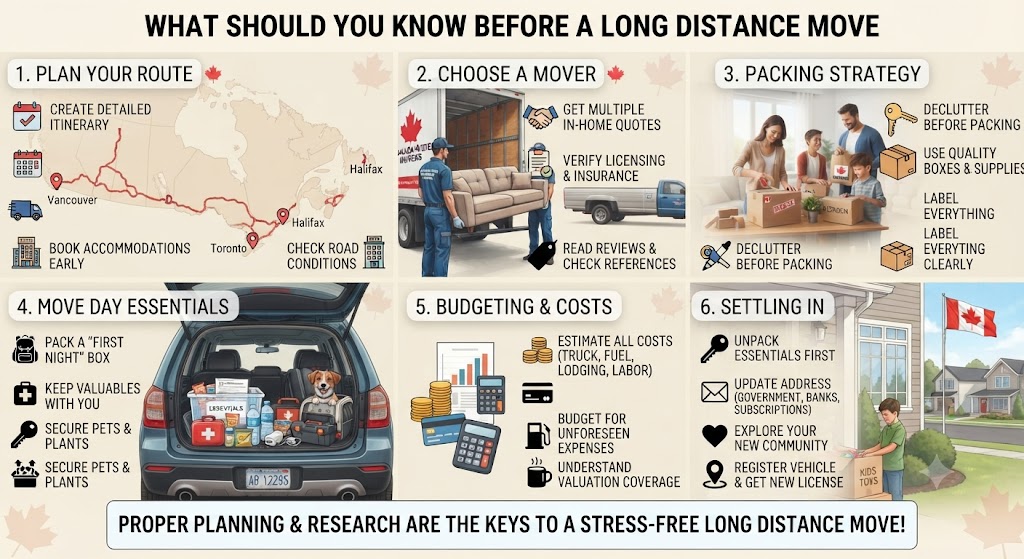
A long-distance move is more than putting your furniture in a truck and driving to another city. You need to plan your moving date, sort your belongings, protect fragile items, update your address, and make sure your household is ready for the trip.
What Should You Know Before a Long Distance Move starts with knowing exactly what you are taking, where it is going, and when you need it there. Canadian families may also need to think about weather, road conditions, provincial requirements, work schedules, children, pets, storage, and temporary housing.
A clear plan can make the move easier and reduce last-minute problems. Start early, keep important documents with you, and choose a moving company that understands long-distance moves.
What Should You Know Before a Long Distance Move?
The first thing to understand is that distance changes the way you plan.
A local move may take a few hours. A move between provinces can take several days and may involve more planning around transportation, storage, delivery timing, and weather.
Before booking anything, write down your current address, new address, moving date, preferred delivery window, and the main items that need to be moved.
This simple list gives you a starting point.
It also helps you explain your needs clearly when speaking with a moving company.
What Should You Plan Before Moving Across Canada?
Start with the big decisions first.
Decide what you are moving, what you are selling, donating, recycling, or throwing away. Moving unwanted furniture across a long distance can create extra work and take up valuable truck space.
Go room by room.
Keep documents, medication, valuables, basic clothing, chargers, and other essentials in a personal bag rather than putting everything into the moving truck.
You should also think about your first few days after arrival.
Will your new home be ready immediately? Will you need temporary accommodation? Do you need storage while waiting for your new place?
Planning these details early can prevent stressful surprises.
How Should You Pack for a Long Distance Move?
Packing for a long-distance move requires more care than packing for a short trip.
Use strong boxes and avoid making them too heavy. Wrap dishes, glassware, electronics, and other fragile belongings properly.
Label every box with the room and a short description of what is inside.
For example:
Kitchen — Plates and cookware
Bedroom — Winter clothing
Office — Computer accessories
A simple label can save a lot of time when you start unpacking.
If packing feels overwhelming, professional help can make the process more manageable. You can learn more about Packing and Moving Winnipeg and how organized packing can support a smoother move.
What Are the Benefits of Planning a Long Distance Move Early?
Early planning gives you more control.
You have more time to sort your belongings, prepare your home, arrange transportation, organize documents, and deal with unexpected changes.
It can also make the moving day less rushed.
For families, early planning is especially useful. Children may need time to adjust to a new school and neighbourhood. Pets may need travel arrangements. Work schedules may need to be coordinated around the move.
A written checklist helps everyone know what needs to happen next.
What Should You Know Before a Long Distance Move With a Moving Company?
Choosing a moving company is another important step.
Ask what services are included and what the moving process looks like from pickup to delivery.
Make sure the company understands the distance, the size of your move, access at both properties, and any special items that need extra care.
Ask questions before booking.
You should know who will handle your belongings, how communication will work, and what happens if your moving schedule changes.
For families moving from Winnipeg to another city or province, Long Distance Moving Winnipeg can be a useful starting point when planning transportation.
Swift Mover helps customers plan moving and transportation needs with a practical, straightforward approach.
What Documents and Addresses Should You Update?
Changing your address is easy to overlook when you are focused on boxes.
Create a list of organizations that need your new address.
This may include your bank, employer, insurance provider, subscriptions, school, medical providers, and government services.
The Government of Canada explains that changing your address with one government department does not automatically update every other department. You may need to update each service separately.
For example, the Canada Revenue Agency has its own address-update process.
If your move is connected with a new job or school, you should also check whether you qualify for the federal moving expense deduction. CRA rules include specific conditions, including a 40-kilometre requirement in qualifying situations.
Always check the current government rules for your situation rather than assuming an expense is eligible.
What Is the Simplest Long Distance Moving Process?
A simple process can keep the move organized.
- Choose your moving date
Pick a date that works with your lease, home closing, work, school, and travel plans.
- Sort your belongings
Separate items into keep, donate, sell, recycle, and discard groups.
- Pack and label
Protect fragile belongings and clearly label every box.
- Prepare your home
Clear pathways and make sure movers can safely access furniture and boxes.
- Keep essentials with you
Carry important documents, valuables, medication, basic clothing, and chargers personally.
- Confirm the move
Before moving day, confirm the pickup details, addresses, access instructions, and delivery arrangements.
- Check everything after delivery
As boxes and furniture arrive, check that your belongings are where they should be before fully unpacking.
This process is simple, but it can prevent many common moving-day problems.
What Should Canadian Families Check Before a Long Distance Move?
Canadian weather deserves extra attention.
A move during winter can involve snow, ice, freezing temperatures, and changing road conditions. Summer moves may involve heat and longer travel periods.
Check the forecast before moving day and keep flexible plans where possible.
Also think about the needs of children and pets.
Keep snacks, water, clothing, entertainment, chargers, and personal items easy to reach during the journey.
If you are travelling a long distance by car, plan reasonable stops instead of trying to complete the journey without breaks.
How Can You Make a Long Distance Move Less Stressful?
The biggest mistake is trying to handle everything at the same time.
Break the move into smaller tasks.
One day can be for sorting. Another can be for packing. Another can be for address changes and final cleaning.
Keep one folder or digital file for important moving information.
Include your new address, moving company details, receipts, documents, travel plans, and important contact information.
This gives you one place to check when you need an answer quickly.
Why Choose a Local Winnipeg Moving Company?
Local knowledge can make planning easier.
A Winnipeg-based moving company understands the practical side of moving from the city, including residential buildings, apartments, condos, houses, offices, loading areas, and local access issues.
Swift Mover provides moving services in Winnipeg and supports customers with different types of residential and long-distance moving needs.
The goal should be simple: protect your belongings, communicate clearly, and make the transition from one home to another as organized as possible.
What Should You Know Before a Long Distance Move? Final Checklist
Before moving day, make sure you have:
- Confirmed your moving date
- Sorted unwanted belongings
- Packed and labelled your boxes
- Protected fragile items
- Kept important documents with you
- Updated important addresses
- Arranged utilities for the new home
- Planned travel for children and pets
- Checked weather and road conditions
- Confirmed moving details
- Prepared an essentials bag
- Kept important contact information accessible
Conclusion
A successful long-distance move usually comes down to preparation.
You do not need to make the process complicated. Start early, remove items you no longer need, pack carefully, keep essential belongings with you, and organize your address changes before the moving day arrives.
For Canadian families, it is also worth checking government information when your move involves work, school, taxes, or changes to government services. The Government of Canada provides guidance for changing your address, while the CRA provides current information about eligible moving expenses.
What Should You Know Before a Long Distance Move is really about being prepared for the small details as well as the big ones. With a clear plan and the right moving support, the journey to your new home can feel much more manageable.
Frequently Asked Questions
How early should I plan a long-distance move?
Start planning as early as possible. Several weeks of preparation gives you time to sort belongings, arrange packing, organize travel, update addresses, and confirm moving arrangements.
What should I keep with me during a long-distance move?
Keep identification, important documents, medication, valuables, chargers, basic clothing, toiletries, and essential family items with you rather than placing them in the moving truck.
Should I pack everything before movers arrive?
Most household items should be packed and ready unless you have arranged professional packing services. Clearly labelled boxes can make loading and unpacking much easier.
Do Canadian moving expenses qualify for a tax deduction?
Some moving expenses may qualify if you meet CRA requirements. For example, eligible moves related to work or business generally require the new home to be at least 40 kilometres closer to the new work location. Check the current CRA rules before claiming anything.